
Mahler & LeWitt Studios
Review 2025
Welcome to our report on the 2025 program. We hope you enjoy reviewing the recent activity.
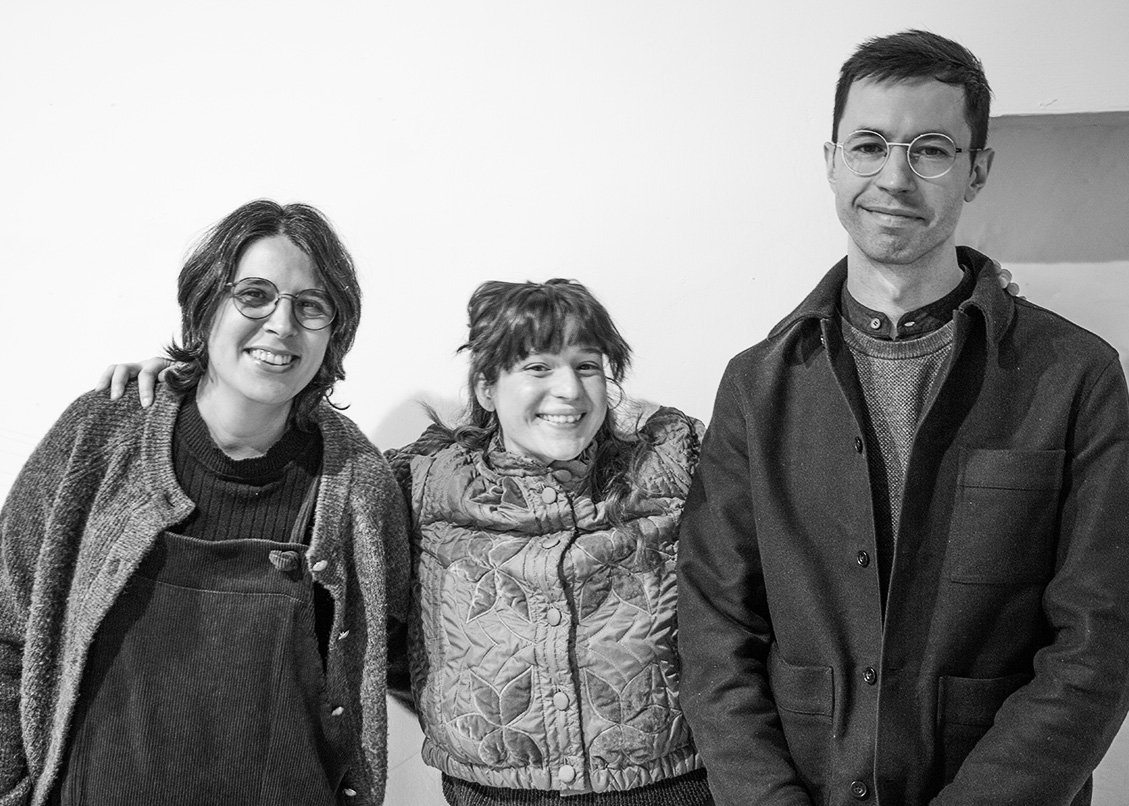
Eva LeWitt, Marina Mahler, Guy Robertson
Founders, Mahler & LeWitt Studios
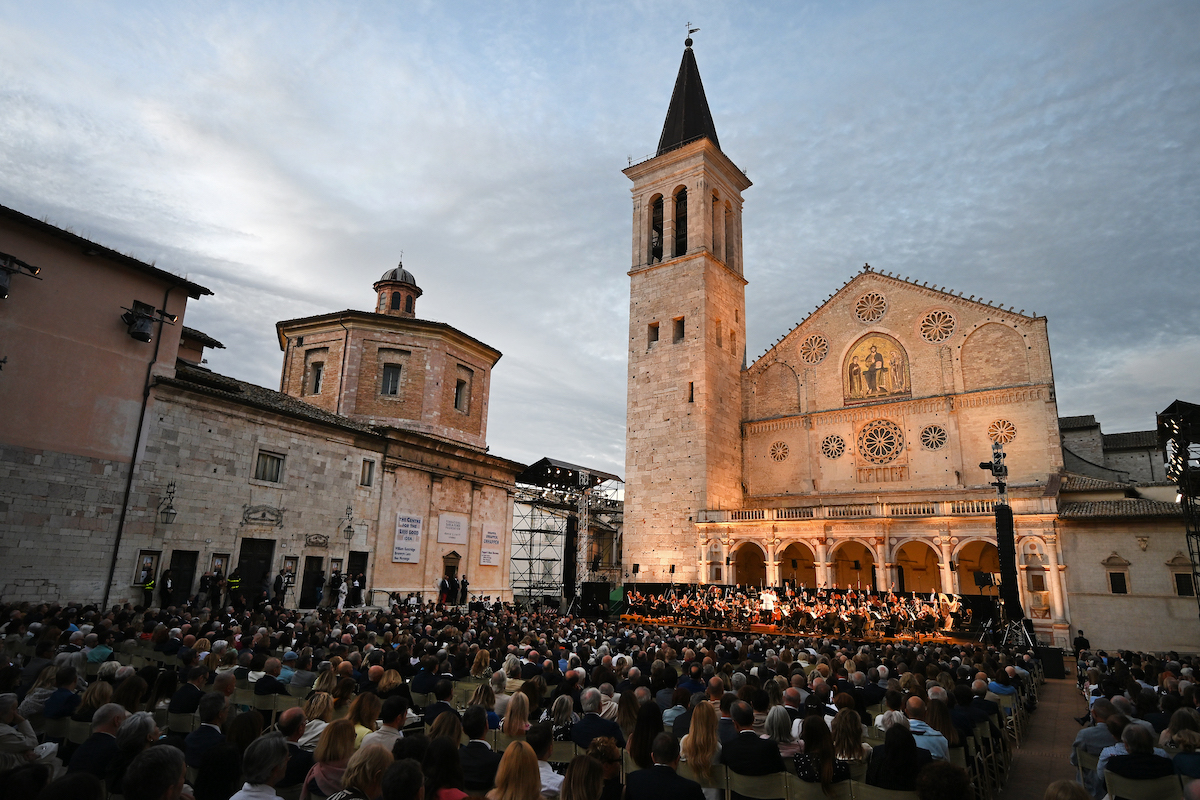
Welcome to our review of the 2025 program
In numbers: across the year, we hosted a record five sessions – Winter, Spring, Festival and Summer, as well as a dedicated Workshopsession. In these sessions, thirty writers, curators and artists, of all disciplines, were in residence, and forty students participated in workshops.
We continued our open call partnerships with the Ivan Juritz Prize and King’s College London, Yale School of Art and Yale University Art Gallery, and Fitzcarraldo Editions. We also organised a call for the Andrew Mangold music residency at Casa Mahler: the LA based artist Johanna Hedva will join us for a research residency in early 2026, with director George R. Miller. With funding from the European Union and Goethe Institute, meanwhile, in collaboration with Fuori Festival and Viaindustriae, we brought Shock Forest Group to Spoleto.
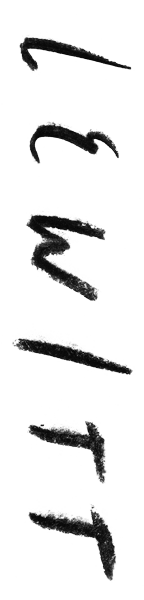
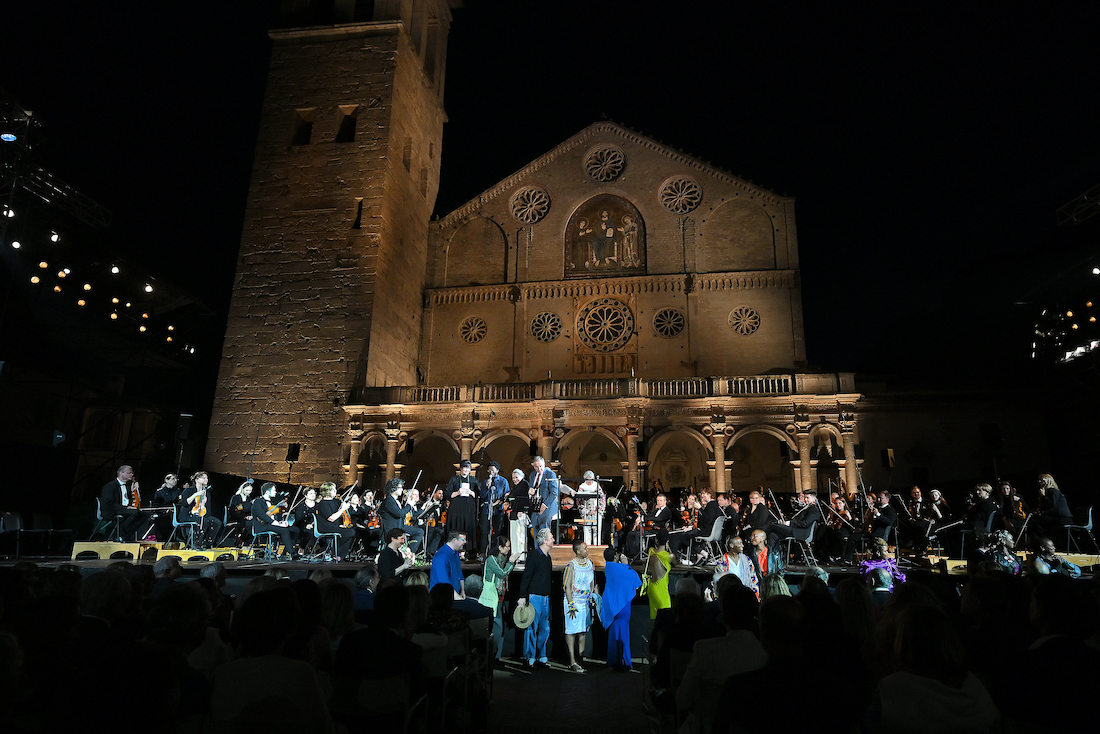
Carla Fendi Foundation were again our key partner for the Festival Session. Curated especially for the annual Spoleto Festival dei Due Mondi, the session hosted a workshop residency with William Kentridge, Neo Muyanga, Bronwyn Lace and The Centre for the Less Good Idea: a project which stimulated a festival wide series of events, workshops, performances and exhibitions involving Kentridge and his team. We are grateful to Monique Veaute, the outgoing director of the Spoleto Festival, for her collaboration over the last five years, and to Maria Teresa Fendi for her ongoing support.
The Spoleto Vocal Arts Workshop, directed by Matthew Rose and Jeremy Carpenter, presented in partnership with Vocal Masterclass Stockholm, has been an excellent addition to the program. In its inaugural session, the workshop brought together talented early career singers with a faculty of world leading opera and song practitioners, from institutions such as Opera Philadelphia and the Metropolitan Opera.
The Torre Bonomo continues to astonish visitors and provide an inspiring home and studio for visiting artists. We are grateful to Valentina Bonomo for this partnership. During the Spoleto Festival this year, former composer in residence Dom Bouffard activated the tower with a series of listening sessions.
Founded in 2015, the Mahler & LeWitt Studios celebrated ten years of activity this year. We marked this achievement with an archival exhibition, hosted by the Musei Civici di Spoleto at Palazzo Collicola, documenting the history of the organisation with a timeline of publications, ephemera, posters, artworks and archival material. As an artist-led enterprise, we are grateful to the artists who have participated in and have come to define our program through these years.
Our thanks also to our Friends, Patrons and Director’s Circle supporters: without you, this program would not be possible.
We hope you enjoy reviewing the recent activity and we look forward to welcoming you to Spoleto soon.
Eva LeWit (Probono Director) and Guy Robertson (Artistic Director)
Winter Session
The Winter Session hosted the awardees of the Ivan Juritz Prize in partnership with King’s College London, selected by Alvaro Barrington, Sadie Harrison and Katharine Kilalea. The prize is open to postgraduate students and recent graduates from across Europe. Three funded residencies are awarded in Image, Text, and Sound. The 2025 awardees were Cat Madden for her experimental drawing practice, Luke Allan for his writing dealing with the loss of a parent, and Laura Netz for her field recording compositions (in Spoleto she developed new work, using recordings of flames, to memorialise the Schoenberg Archive, recently destroyed in the Los Angeles fires).
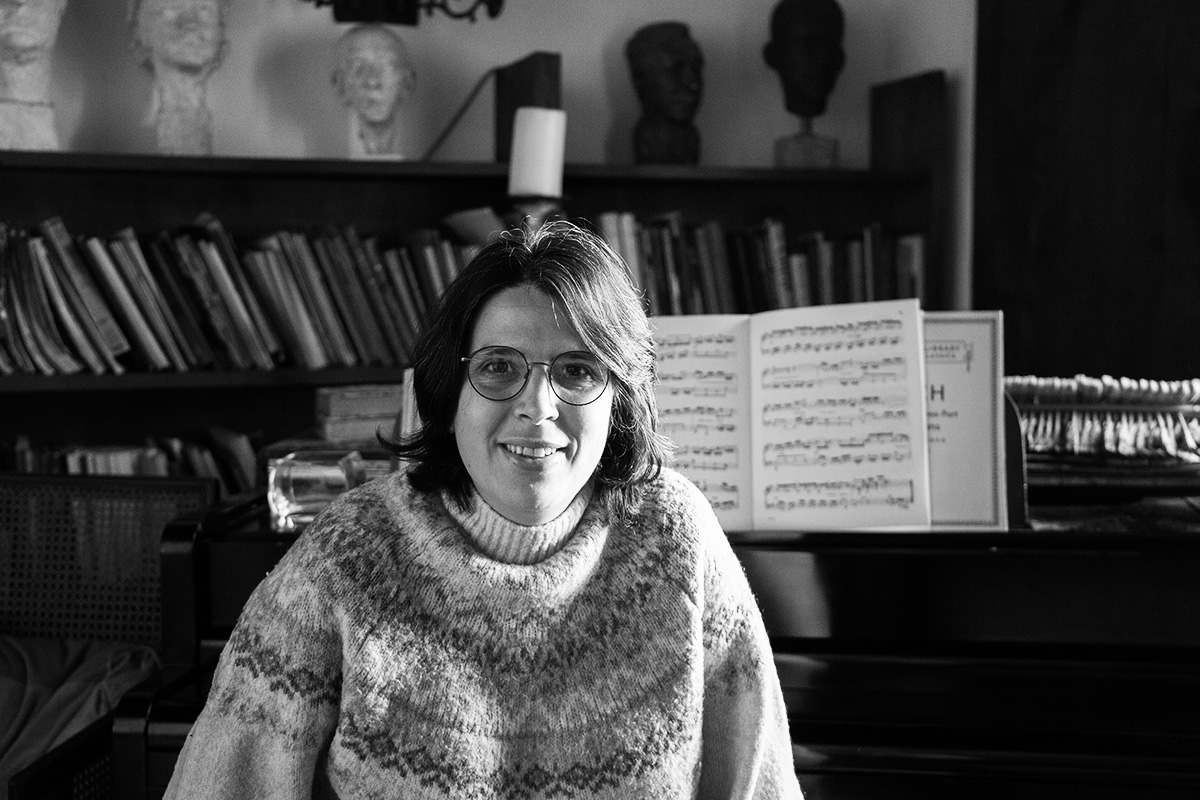
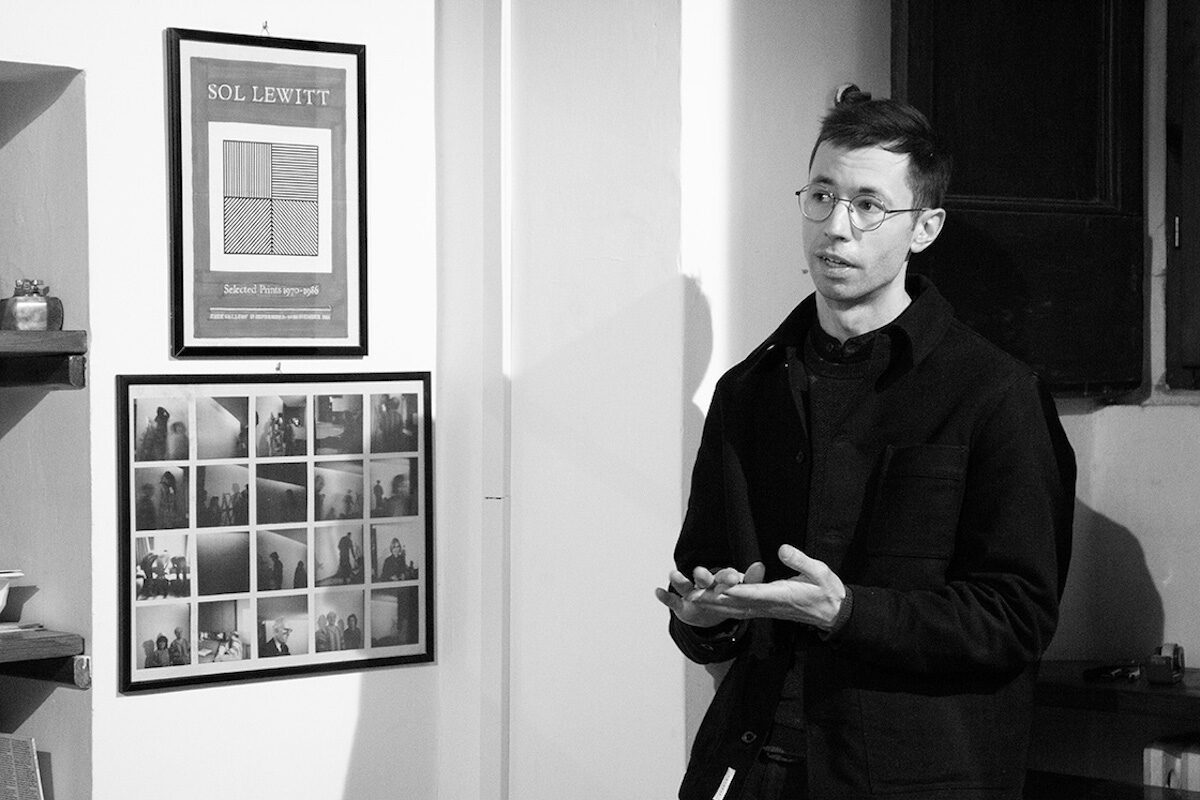
My time in Spoleto and at the Mahler & LeWitt Studios has impacted so much more than my making practice. I had the time and space to be present and to experiment, and I met and had conversations with inspiring and generous people. I was able to explore work which I’d had in mind for a long time – feeling like months of work was developed in just two weeks! It was a time of learning and discovery. Cat Madden
The Mahler & LeWitt Studios is exceptional. I was fortunate to be working from the music room at Casa Mahler: an extraordinary place to find inspiration, open your mind, and connect with Mahler’s genius. Laura Netz
Spring Session
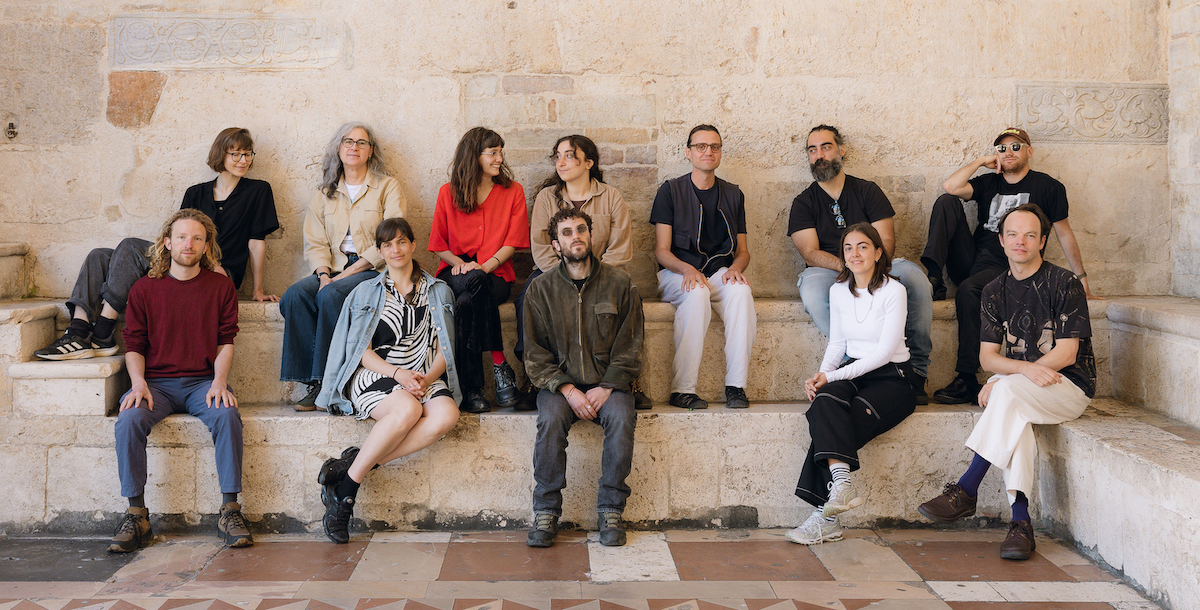
In partnership with FuoriFestival, Viaindustriae and Culture Moves Europe, our Spring Session hosted Shock Forest Group (Sheryn Akiki, Axel Coumans, Susanna Gonzo, Nicolas Jaar, Daria Kiseleva, Jelger Kroese and Masa Nazzal): their collaborative, research-based work explores intersections between technology, violence and ecology. The session also hosted Belgian choreographer Vera Tussing whose performances and installations are driven by her interests in perception, the senses, embodied experience and multisensory spectatorship. Meanwhile, Joshua Leon and Daniela Ruiz Moreno returned to continue research for their project Liquidity, and we were also joined by curator in residence Rebecca McGrew.
Shock Forest Group
Susanna Gonzo, Daria Kiseleva, Jelger Kroese, Axel Coumans, Nicolas Jaar, Masa Nazzal
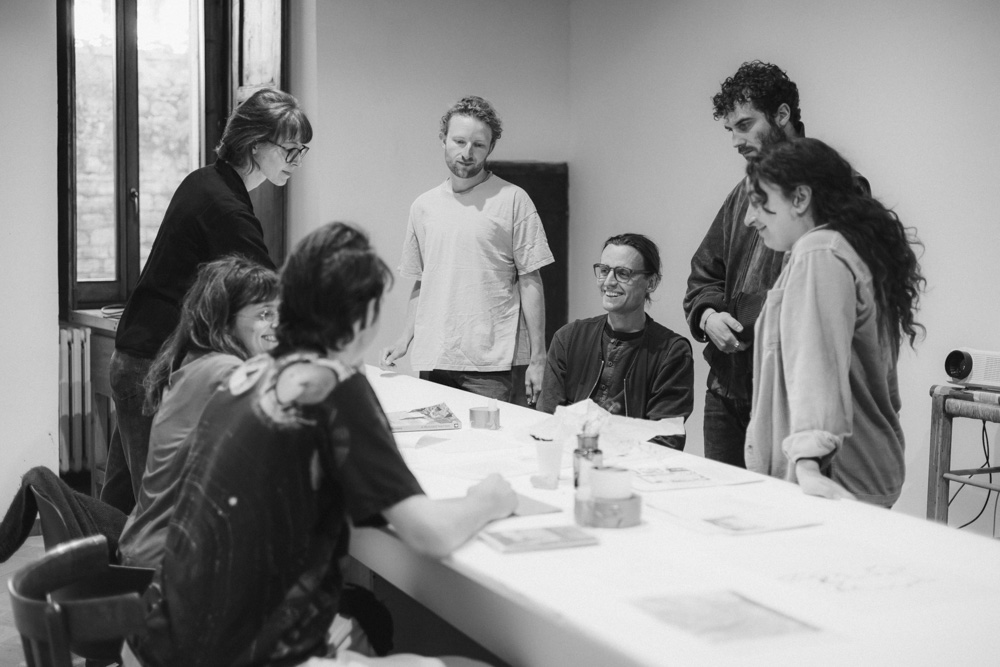
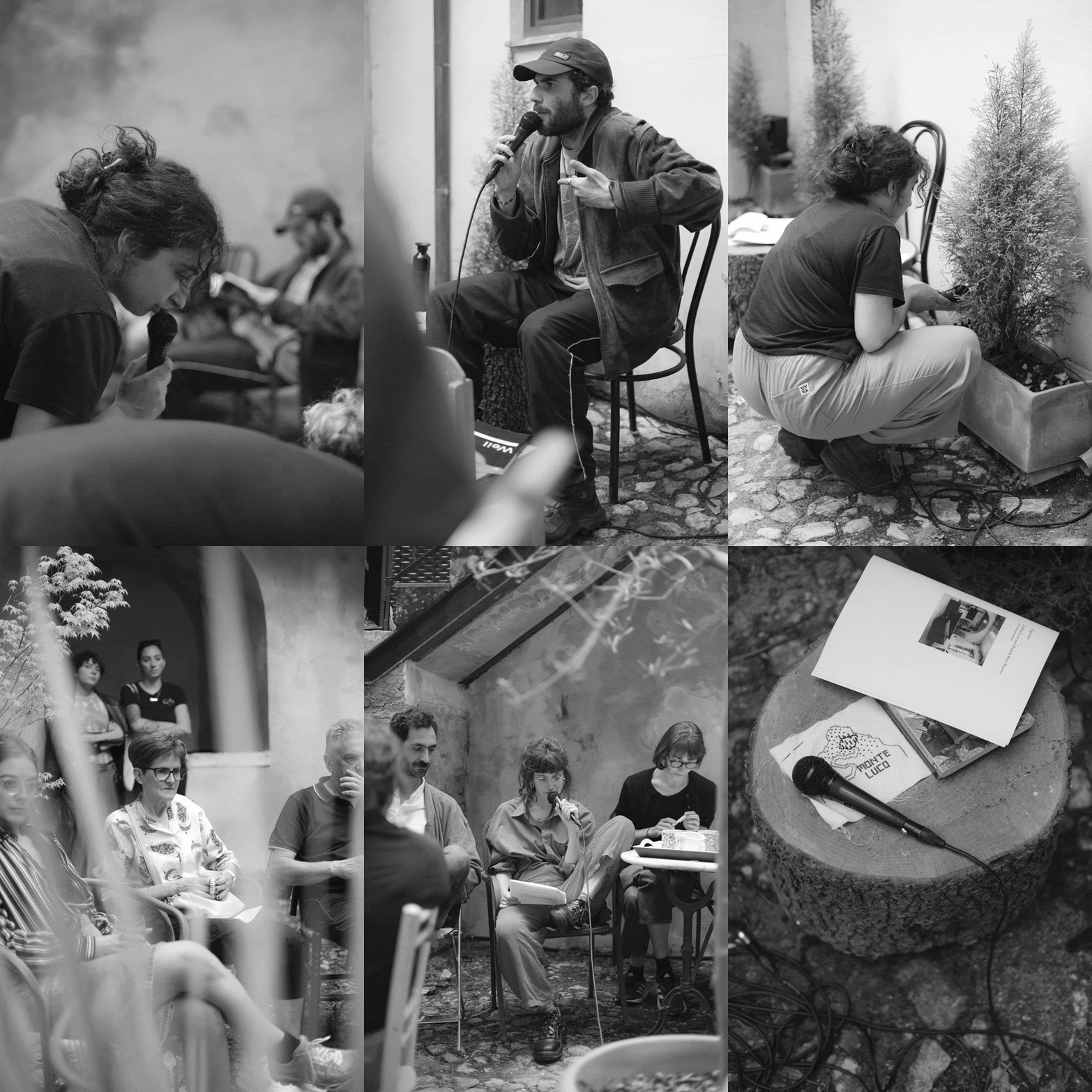

SFG is a decentralised collective consisting of artists, activists, ecologists, musicians and researchers who, through a process of ‘collaborative listening’, explore relationships between technology, violence and ecology. Their work creates opportunities for community engagement, public performance, collective improvisation, and other experiments in radical presence. SFG’s research in Spoleto focused on the enclosed, ancient sacred forest on Monteluco. For their Open Studio they shared an improvised performance titled ‘Café Rumor’, which drew together their ongoing research. This is an extract from their accompanying text:
… State control and national identity are always enmeshed with the very act of bordering itself. In the context of our present moment, where far right governments are proliferating around the world, we see how their focus often tends to centre around immigration. The inner sanctity of the state is dependent on defining itself against another, national identity is protected like a sacred forest. Where do we find the openings in a world that is bordered? How to resist a system of violent physical and mental enclosures without using the same tools as those of a bordered world? What does a political program based on collective joy look like? What does it sound like? What will it sound like? Where can we find its echoes? …
To read the full text and for more information about SFG’s project, click here. SFG will return to Spoleto in 2026 to develop a second phase of their residency and to form a New Temporary Shock Forest Group, inviting local artists and audiences to participate in their research.
Liquidity
Joshua Leon and Daniela Ruiz Moreno
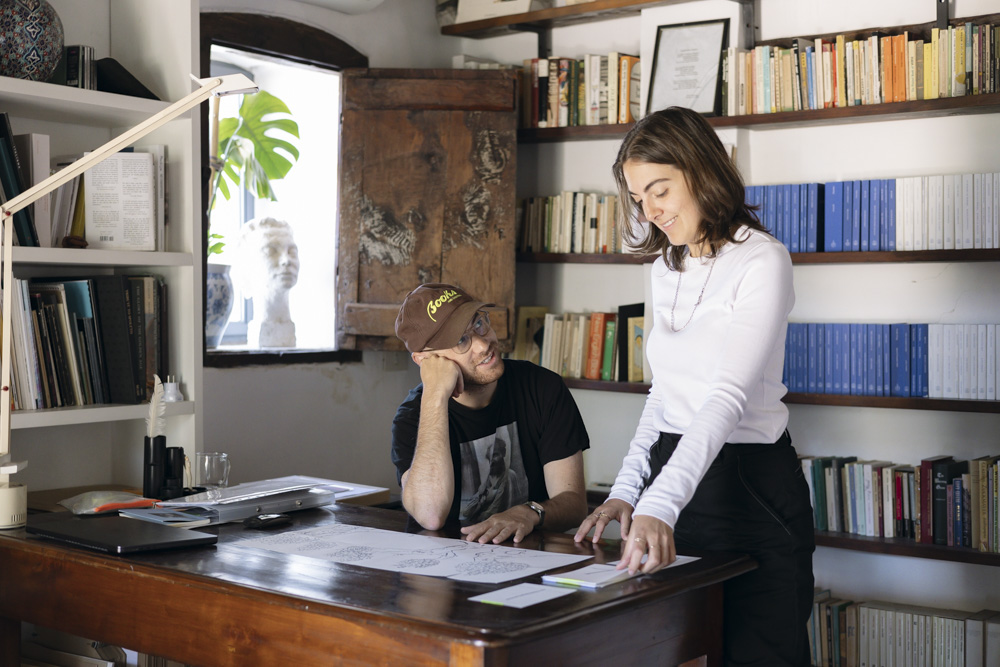
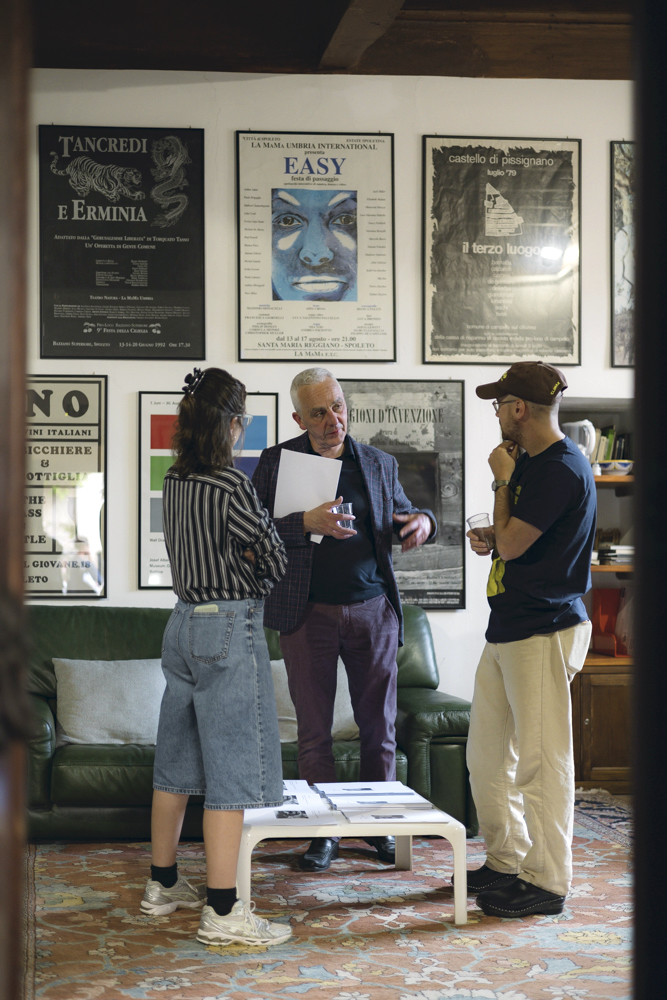
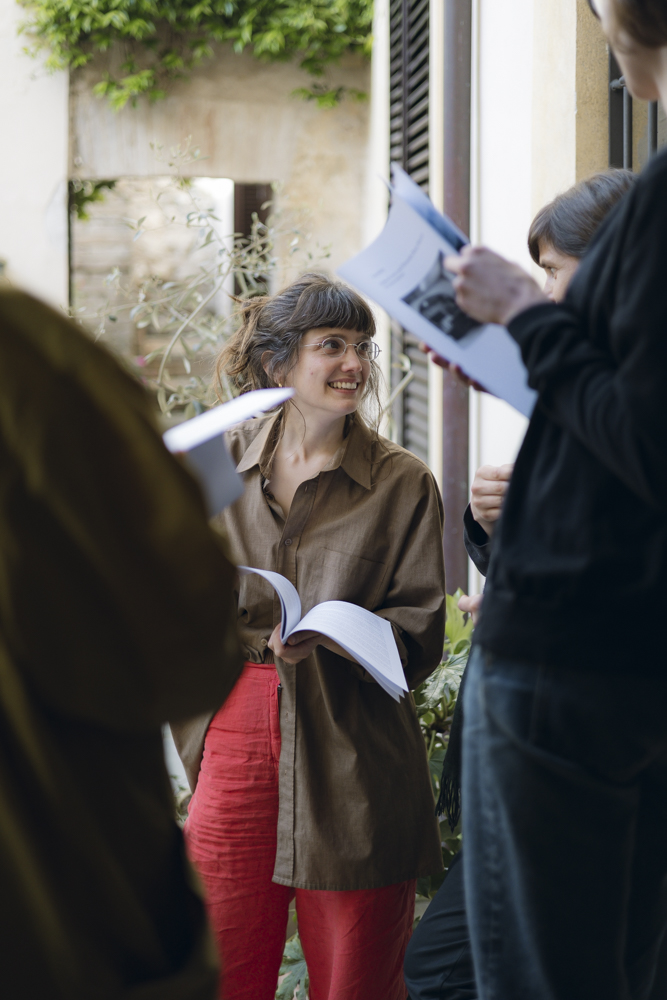
Artist Joshua Leon and curator Daniela Ruiz Moreno returned to Spoleto to continue developing their project Liquidity exploring the contemporary condition of the olive tree and its enduring role as a witness to eco-social transformation throughout history. Their research process was documented in a booklet, presented at their Open Studio, which includes a transcribed conversation alongside an extended proposal for the exhibition planned for 2026 in Spoleto. Read more here.
Rebecca McGrew
Curator in Residence
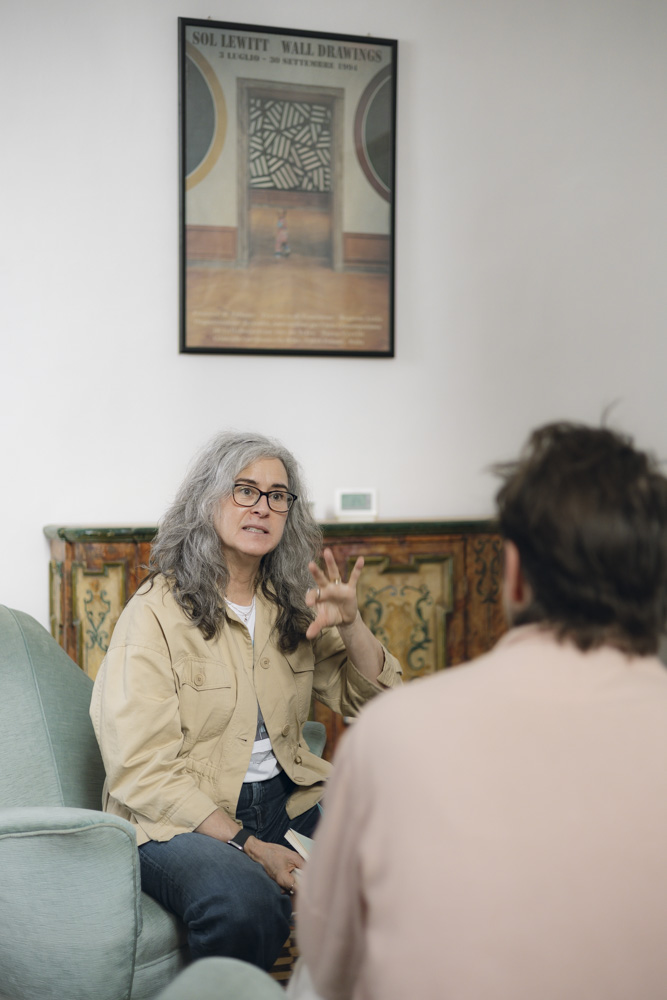
In January 2025 we reached out through our networks to see if we could assist members of the arts community whose lives had been derailed by the devastating Southern California wildfires. We were connected with Rebecca McGrew, curator, art historian, writer, and arts professional specialising in contemporary art. Rebecca lost her home and all her belongings in the fires.
During her residency, Rebecca spent part of her time researching Claire Falkenstein’s (1908–1997) time in Italy. A sculptor, painter, printmaker, jewellery designer, and teacher, Falkenstein was most recognised for her often large-scale abstract metal and glass public sculptures. She was one of America’s most experimental and productive artists of the 20th century. Rebecca is currently President of the Claire Falkenstein Foundation.
Vera Tussing
Choreographer in Residence
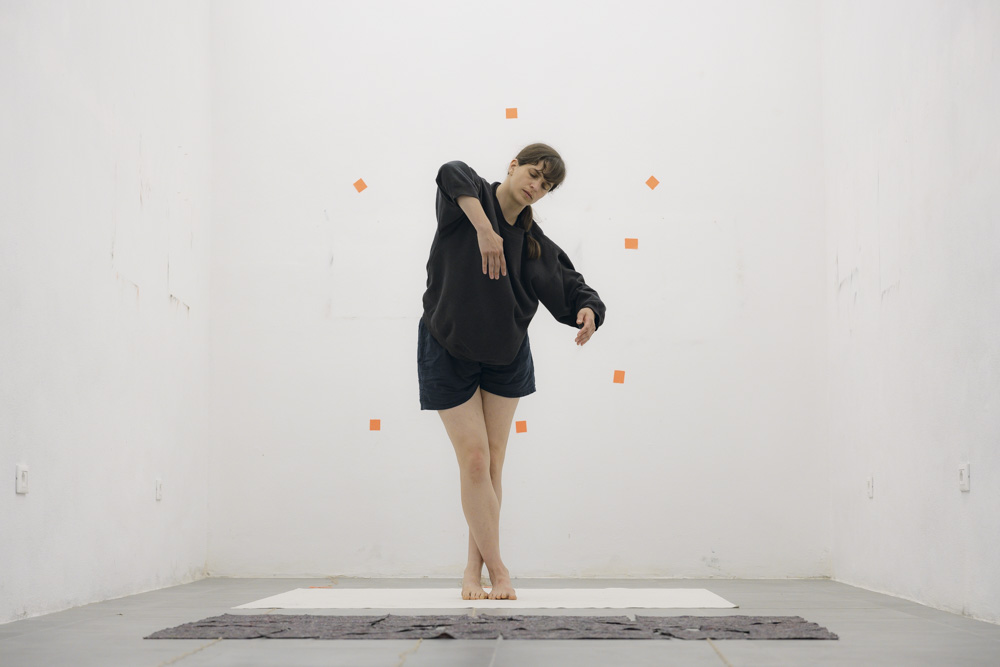
Choreographer in residence Vera Tussing began research on a new project, she writes:
At this stage I have developed two movement scores which evolve around shapeshifting dialogues: one happening within the dancer, the other happening in a ‘movement installation’ in the space. What are these shapes? Are they concepts or ideas that have shaped us: limitations, belief systems…? … The whole idea of showing movement as emerging out of multiple dynamics has to do with undoing an ideological assumption: that movement emerges from a unified self. Instead, movement is the result of a chaotic process of encounter, between times, spaces, discourses, laws, passports, and borders.
Vera returned to Spoleto in September to continue her research. To learn more about her practice and read her full statement accompanying her Open Studio, click here.
Spoleto Vocal Arts Workshop
Directed by Mathew Rose and Jeremy Carpenter
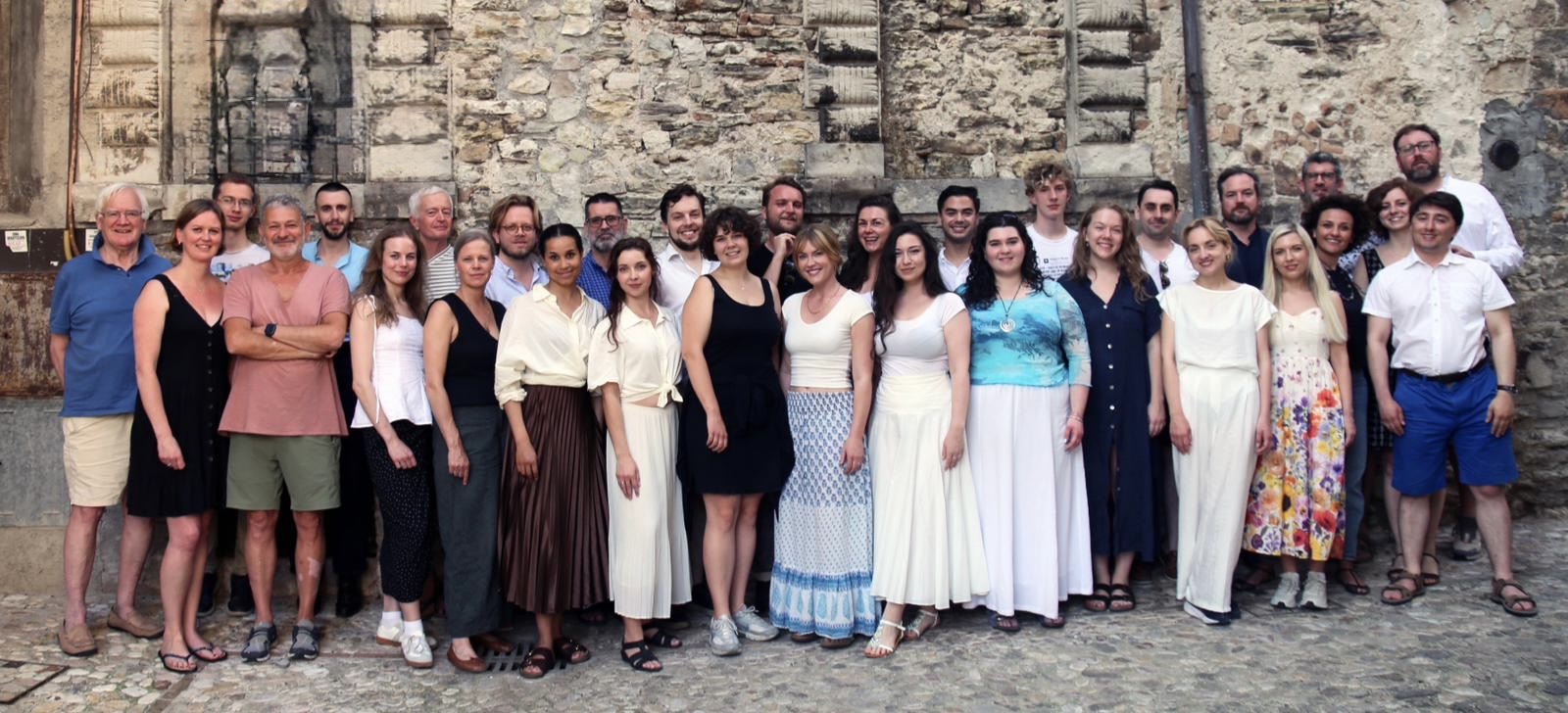
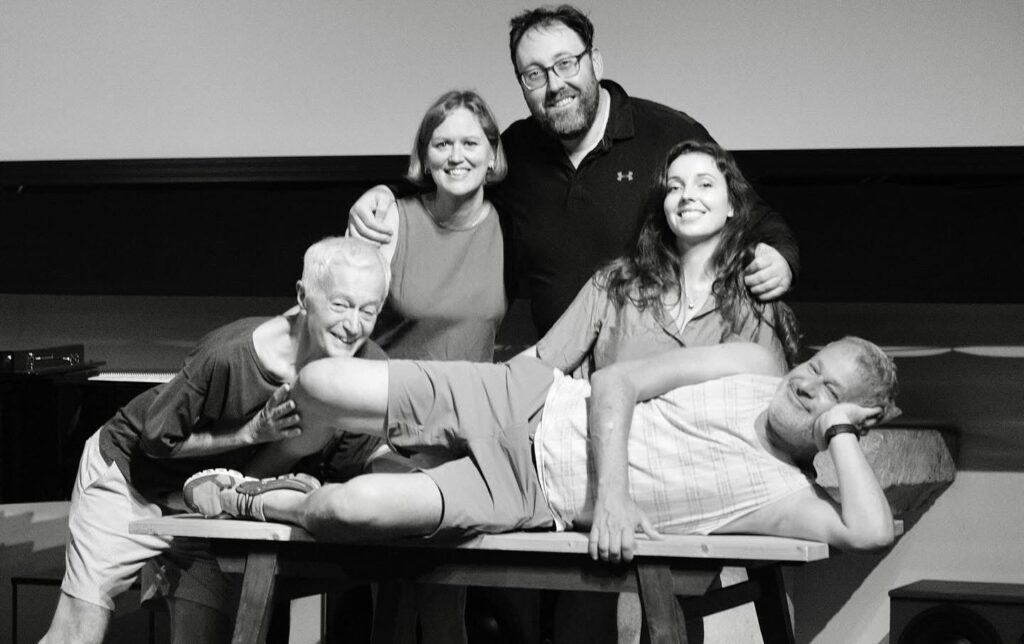
In its inaugural season the Spoleto Vocal Arts Workshop brought together talented early career singers with a faculty of world leading opera and song practitioners. The workshop was organised by leading singers Jeremy Carpenter and Matthew Rose to help train the next generation of vocal performers.
The faculty included legendary opera directors Patrice Caurier and Moshe Leiser, The Metropolitan Opera’s Jonathan Cameron Kelly, Brian Dickie (former Director of Chicago Opera Theatre and Glyndebourne), Corrado Rovaris (Music Director of Opera Philadelphia and Music Director of the Artosphere Festival Orchestra), composer Paul Max Edlin, soprano Camilla Tilling, as well as artist-coaches, Anna Tillbrook, Elena Postumi and Daniela Pellegrino.
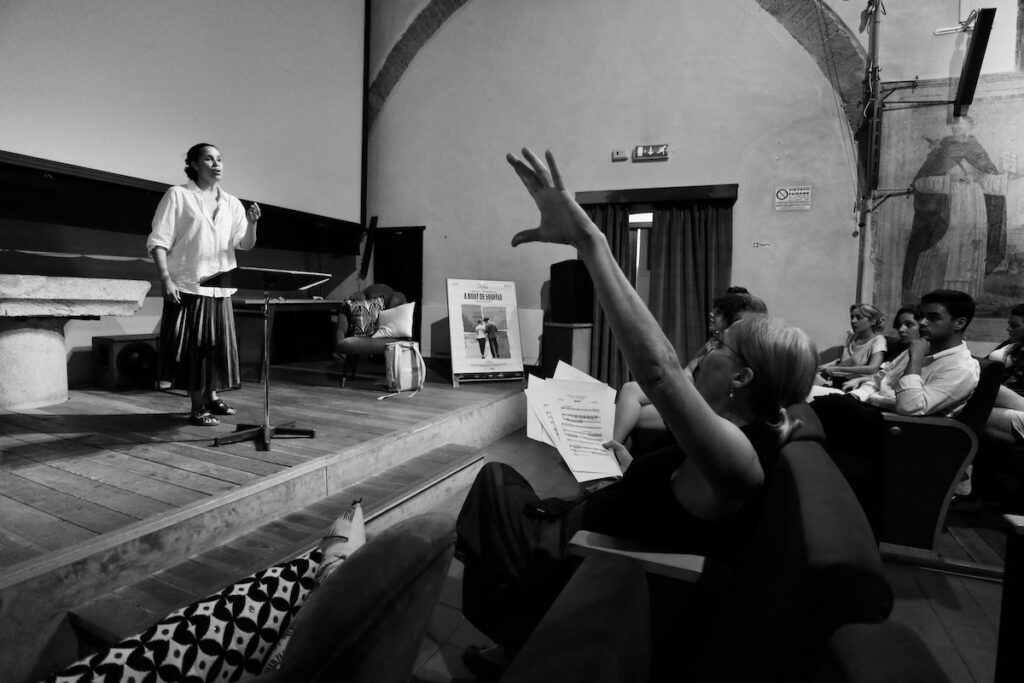
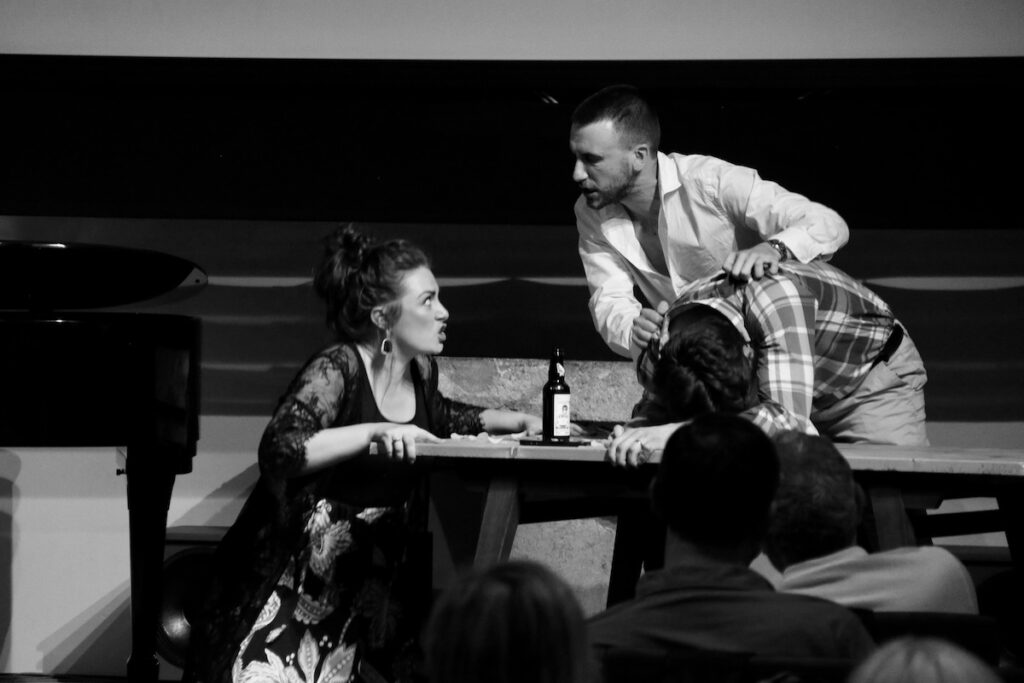
Participants worked on all aspects of vocal and dramatic training. Each day an Open Rehearsal invited local artists and audiences to experience the processes behind the discipline and artistry of singing. Two free public concerts were also organised.
Festival Session
The Centre for the Less Good Idea
William Kentridge, Bronwyn Lace, Neo Muyanga
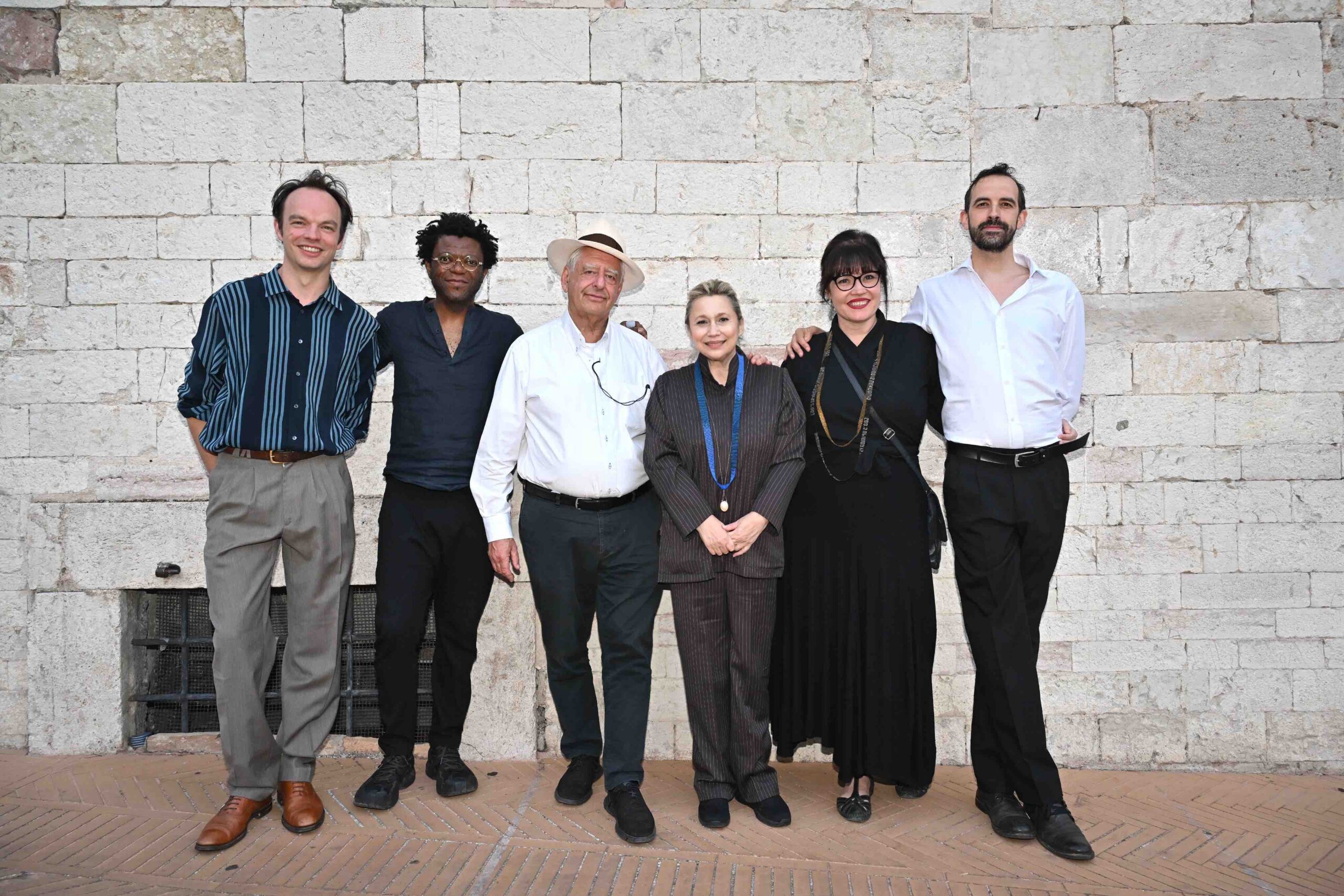

A Carla Fendi Foundation and Mahler & LeWitt Studios project, in collaboration with Spoleto Festival dei Due Mondi
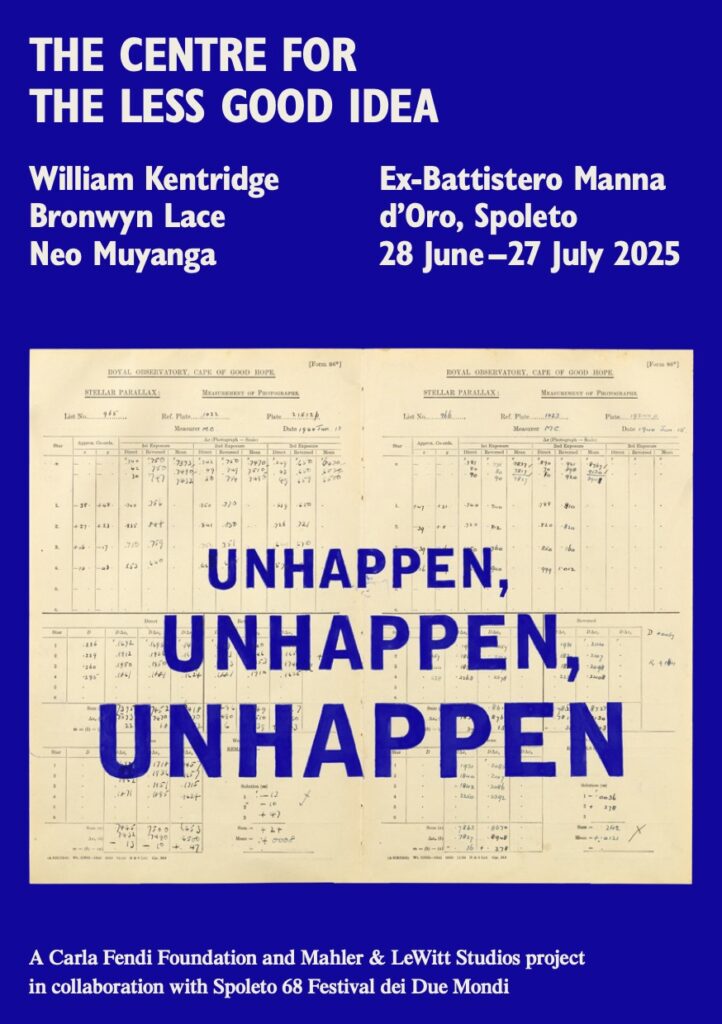
Founded in 2016 by William Kentridge and Bronwyn Lace, The Centre for the Less Good Idea in Johannesburg, South Africa, creates and supports experimental, collaborative and cross-disciplinary arts projects. It is a space for alternative-form work which doesn’t have a natural home in a theatre or gallery, a space to follow impulses, connections and revelations. At the Mahler & LeWitt Studios we have a consonant approach to our work and it is this shared commitment which led us to develop a workshop residency and exhibition program produced by Carla Fendi Foundation in collaboration with the Spoleto Festival dei Due Mondi.
An exhibition with events, a related series of workshops, and a performance lecture were conceived and staged in a former baptistery on Spoleto’s Piazza Duomo, and in a deconsecrated 12th century church. William Kentridge’s opera The Great Yes, The Great No, meanwhile, incubated at The Centre, was brought to Spoleto’s Teatro Nuovo.
As their name specifies, The Centre’s unique strategy is to encourage artists to pursue the ‘less good idea’. This is the idea which appears first on the margins, as a result of creative blockage or chance, but which subsequently permits a more vital creative exploration.
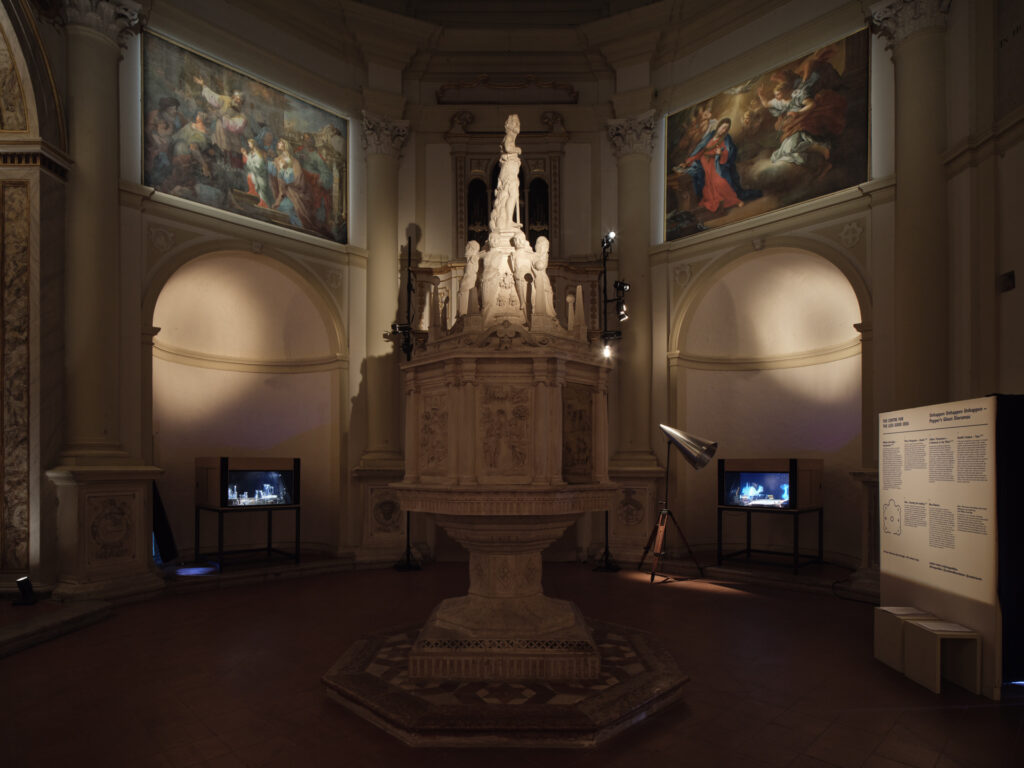
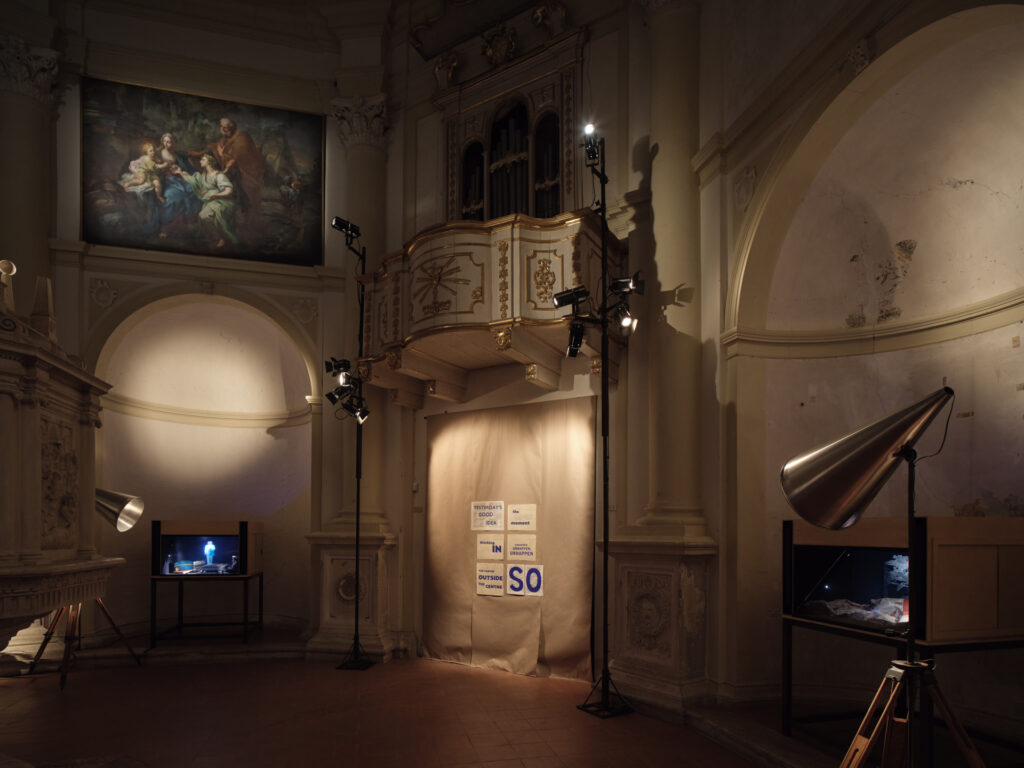
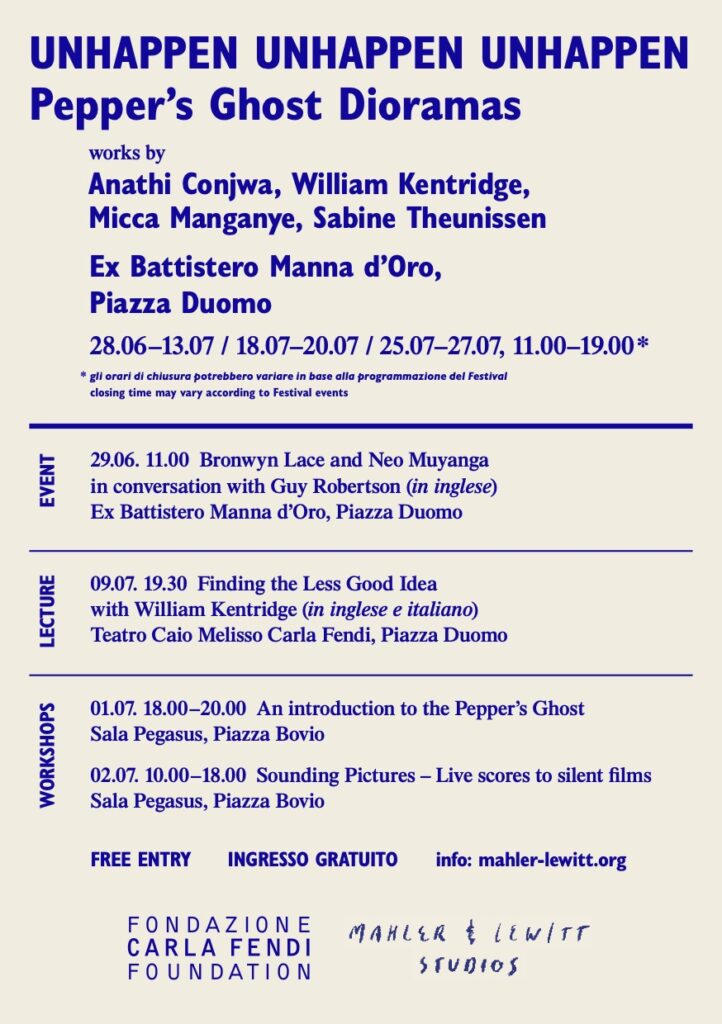
Unhappen Unhappen Unhappen – Pepper’s Ghost Dioramas
Ex-Battistero Manna d’Oro, Spoleto, 27 June – 29 July
The exhibition ‘Unhappen Unhappen Unhappen – Pepper’s Ghost Dioramas’, curated by Bronwyn Lace and Guy Robertson, premiered four Pepper’s Ghost performance dioramas developed by artists working with The Centre: Anathi Conjwa, William Kentridge, Micca Manganye, and Sabine Theunissen.
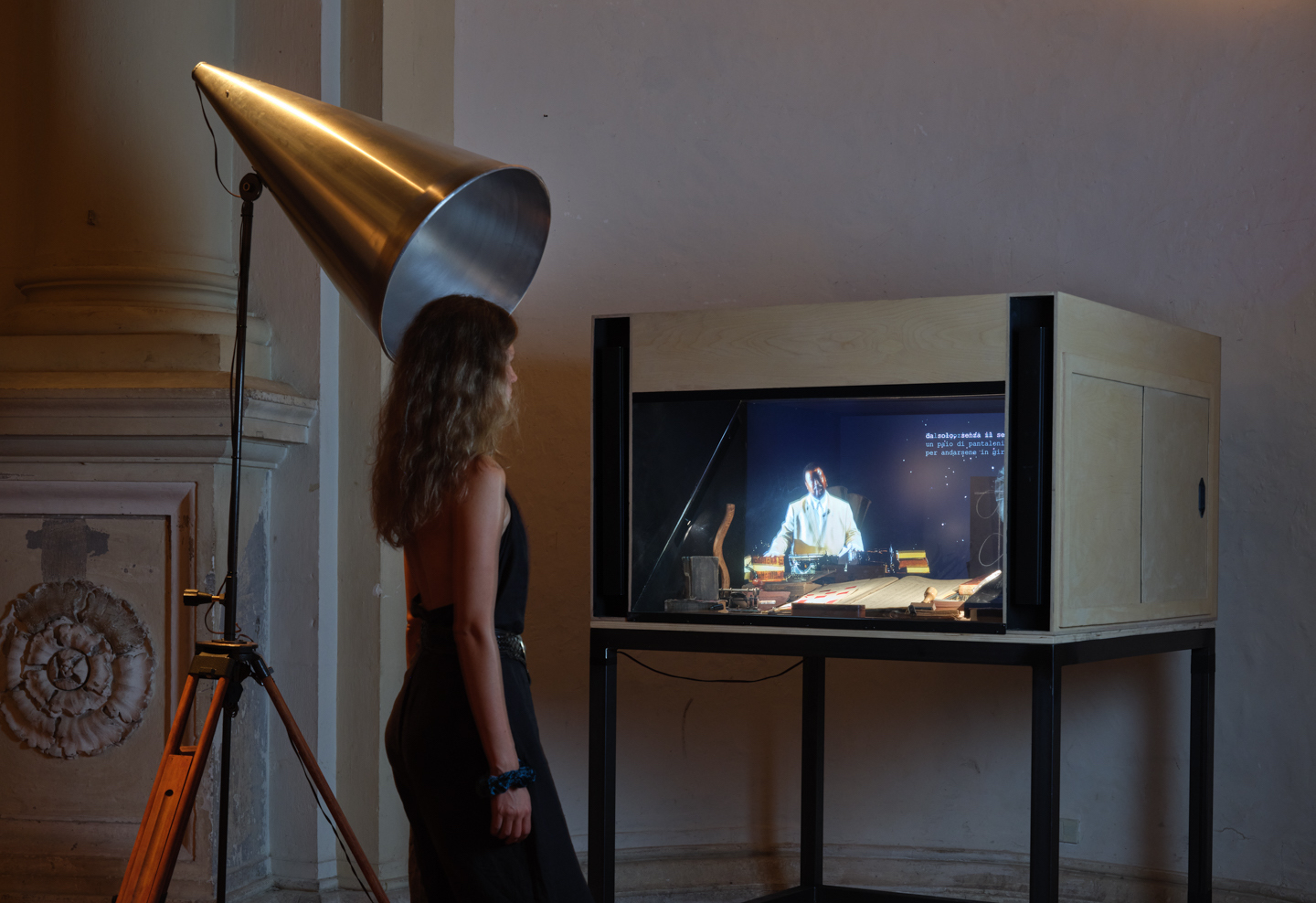
Pepper’s Ghost is a Victorian theatrical illusion technique which has become one of The Centre’s signature performance tools. It uses a half-silvered mirror and dynamic lighting to project images into an indeterminate ‘spectral’ space. With the introduction of video compositing and live projection, multi-layered illusory performative and narrative approaches become possible. Experiments with the technique are able to surface ideas around the gaze and ways of seeing, excavate and interrogate heavy histories, and activate archives. The Pepper’s Ghost performance dioramas combine the Pepper’s Ghost with tabletop theatre and puppetry for the first time. As complete, miniature narrative worlds, the four performance dioramas engage visitors in a constantly shifting, perpetual performative space.
While Kentridge’s Mayakovsky experiments with language and collage-like projected animation, Manganye’s Hands looks at the use of objects and the body as puppetry inside the diorama. Conjwa’s Tata is a deeply personal work and one that uses the Pepper’s Ghost as a tool for giving new life to memory. Finally, Theunissen’s work, made specifically for the Pepper’s Ghost diorama format, merges shadow, music, and animation to put forward a series of compelling performative vignettes.
The word ‘unhappen’ describes the process of reversing past trauma. Its nonsense, however, points to the impossibility of doing so. In the context of The Centre’s work, this trauma refers to histories of apartheid and colonisation, but also extends to difficult personal experiences. The repetition of ‘unhappen’ is conflicting: it both reinforces the memory, whilst acting like a mantra, or a prayer, which attempts a reconciliation with the past. The Pepper’s Ghost technique allows artists to lean into the past, question memory and create new stories.
Performances and Events
Teatro Caio Melisso Spazio Carla Fendi and Sala Pegasus
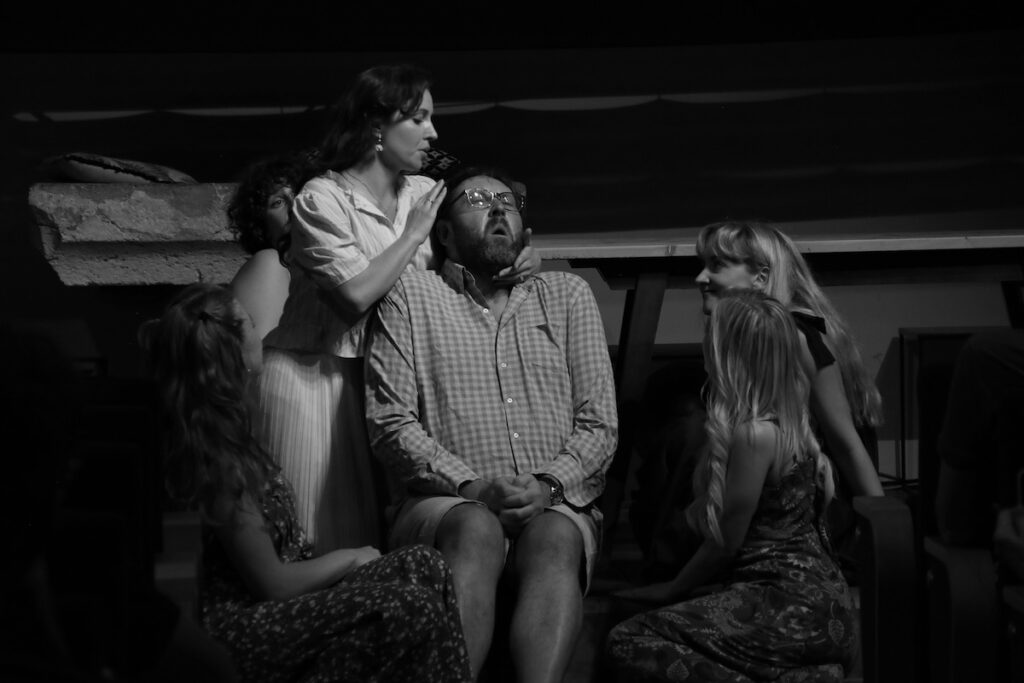
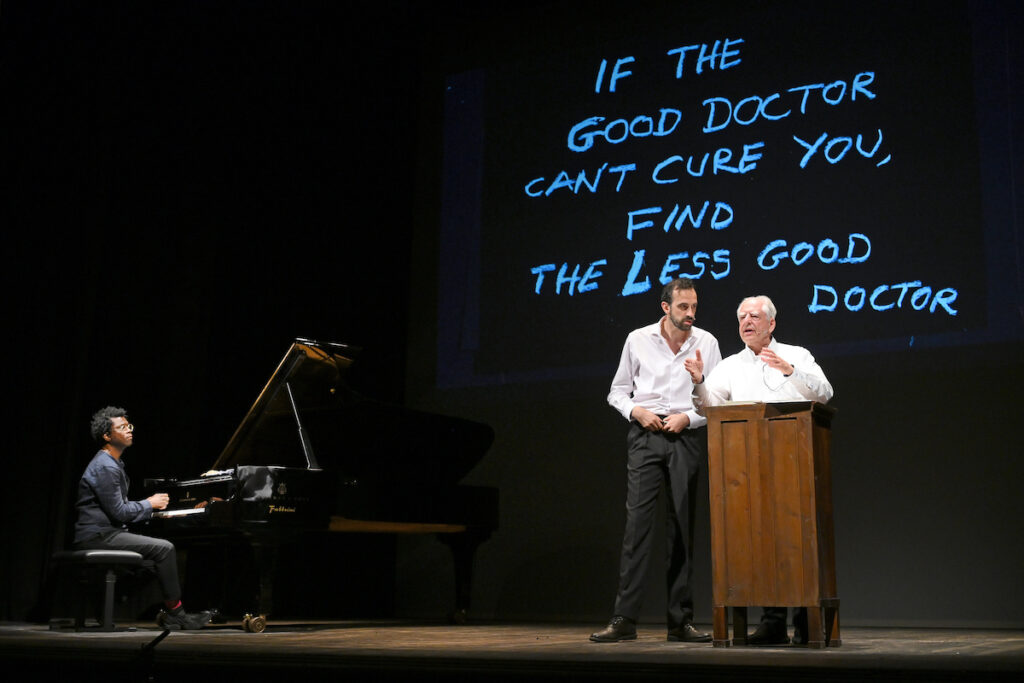
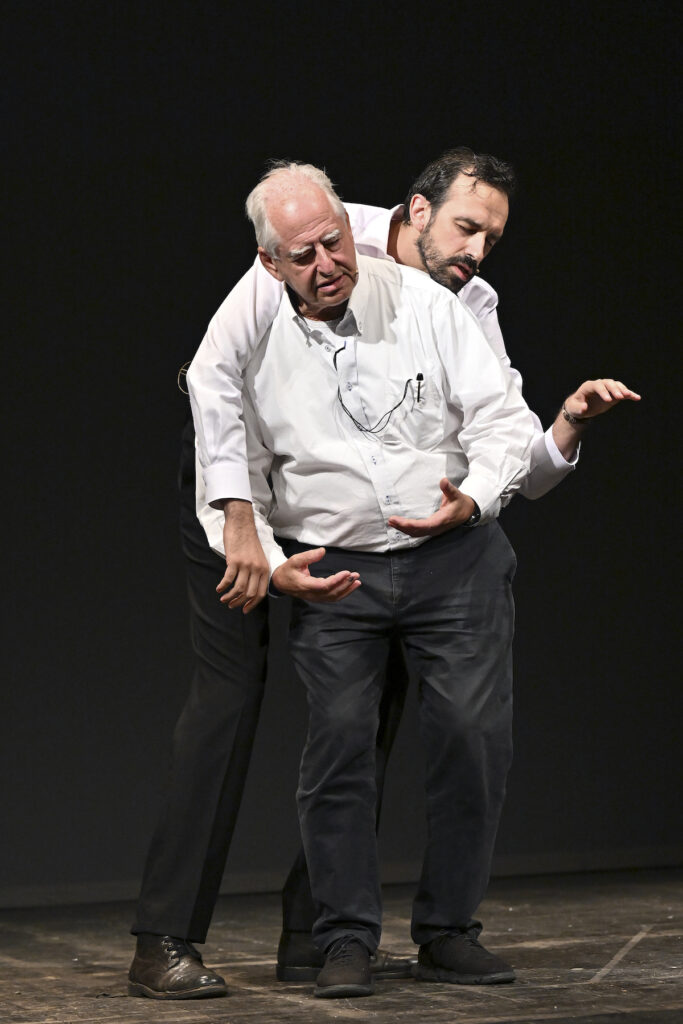
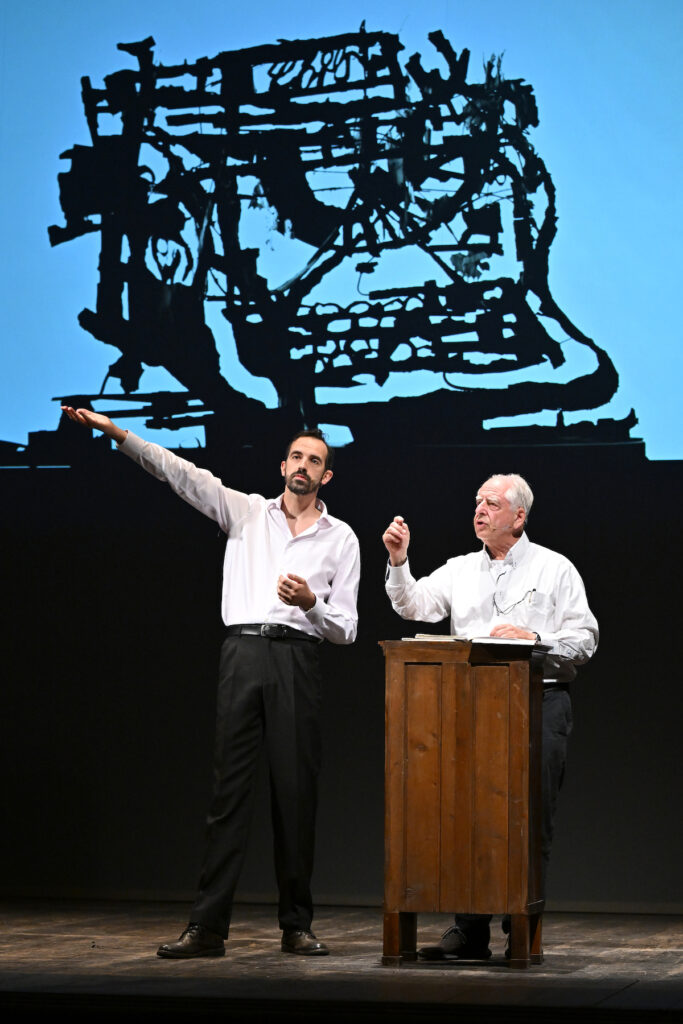
Throughout The Centre’s residency, participating artists hosted talks, walk-abouts, workshops, and performances. The following photographs document Kentridge’s performance lecture ‘Finding the Less Good Idea’ in which, accompanied by actor Andrea Fabi and composer Neo Muyanga, he elaborates on his own artistic practice and the philosophies behind the pursuit of the ‘less good idea’.
Workshops
Sala Pegasus
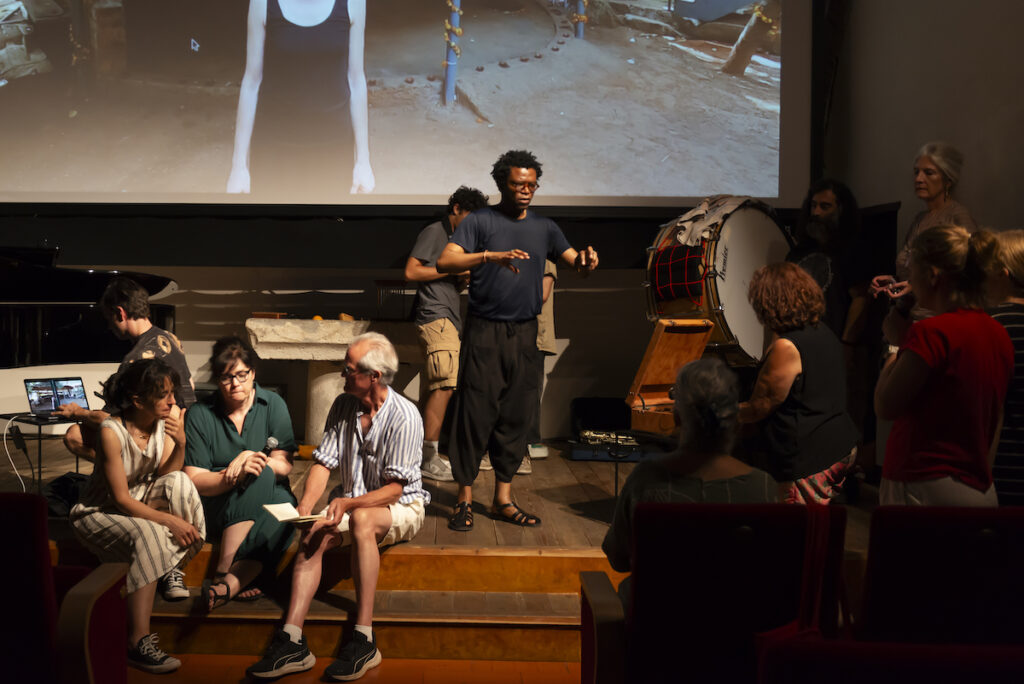
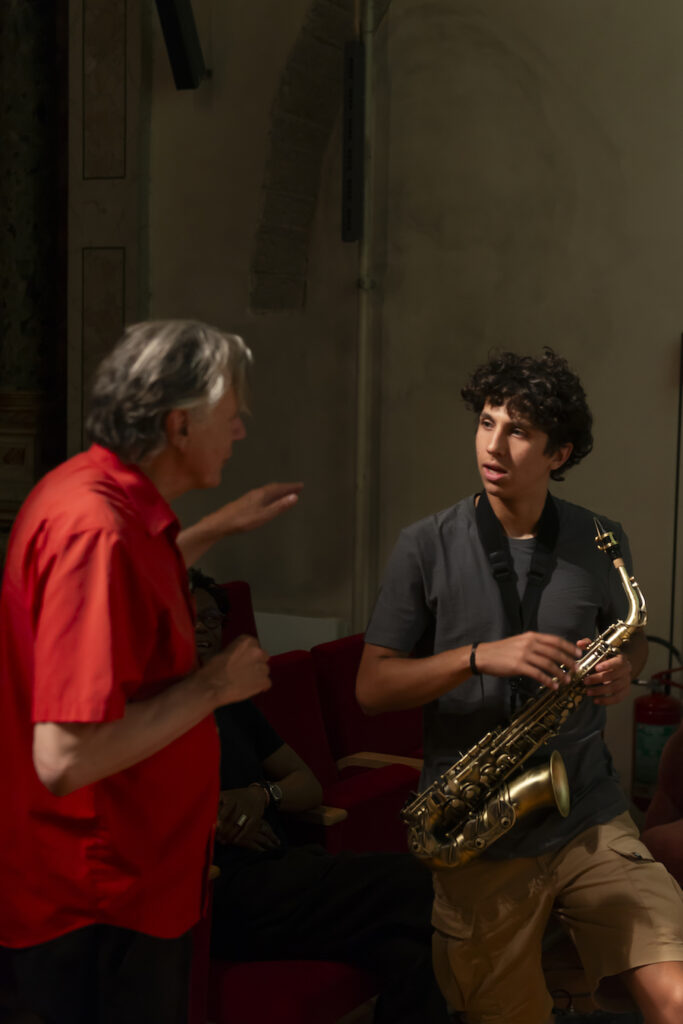
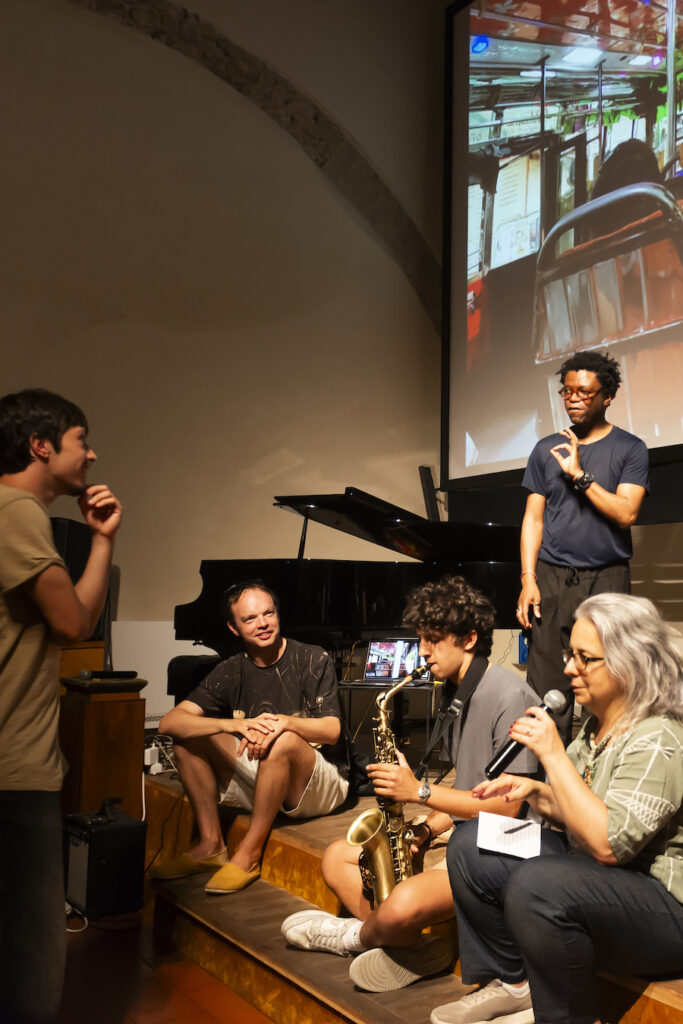
During their residency The Centre hosted a series of workshops exploring the use of the Pepper’s Ghost technique. Neo Muyanga also hosted a live-composition workshop titled ‘Sounding Pictures – live scores to silent films’ which asked: what happens when we look at a silent film collectively and collaboratively, responding with live, improvisational sound, performance and text, and how does this influence the narrative of the film? Workshop participants included musicians and composers, filmmakers (who contributed work to be soundtracked), directors and artists.
Mahler & LeWitt Studios
Ten years of activity: 2015–2025
Musei Civici di Spoleto, Palazzo Collicola
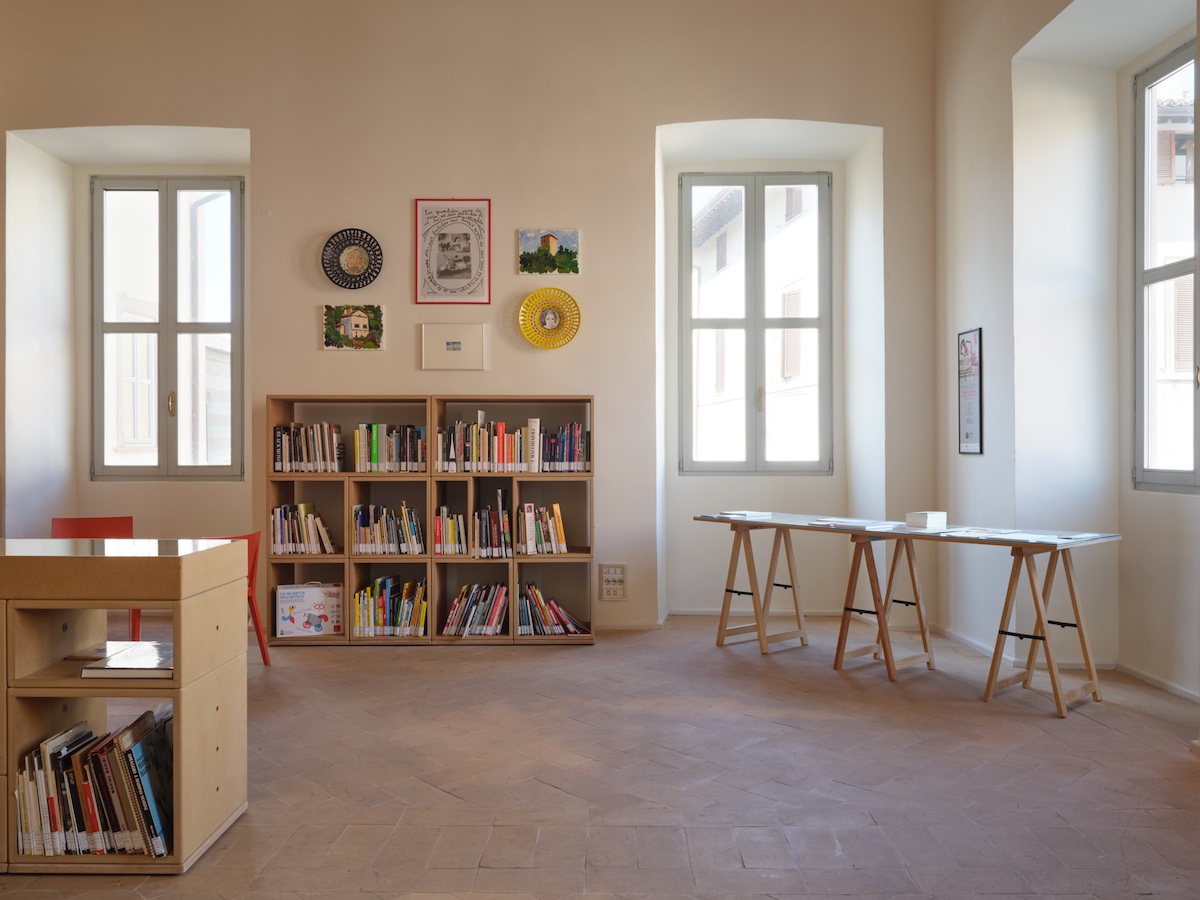
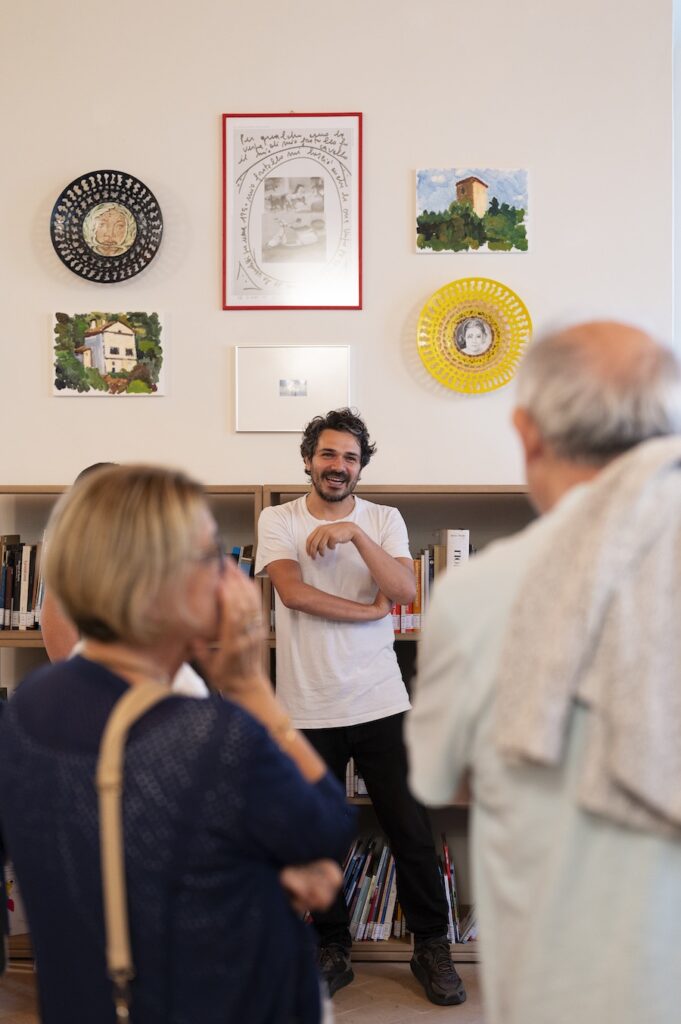
We celebrated ten years of activity in Spoleto with an exhibition at the Musei Civici di Spoleto, Palazzo Collicola. The story of the Mahler & LeWitt Studios was told through a timeline of publications, posters and ephemera.
278 Artists • 215 Residencies
31 Exhibitions • 24 Publications
19 Performances • 8 Symposia
Dozens of workshops and Open Studios
Less quantifiable: our residencies have been creating and supporting a community which enables and supports artistic exchange and discourse – across disciplines, generations and borders. We are invested in creating experiences which have a positive and lasting influence on an individuals creative engagement with the world. We believethat artists are essential: to our understanding of human experience – its beauties and hardships – and in helping to assess and challenge the values held by our societies.
Mahler – Songs of the Earth
Film Screenings, Sala Pegasus
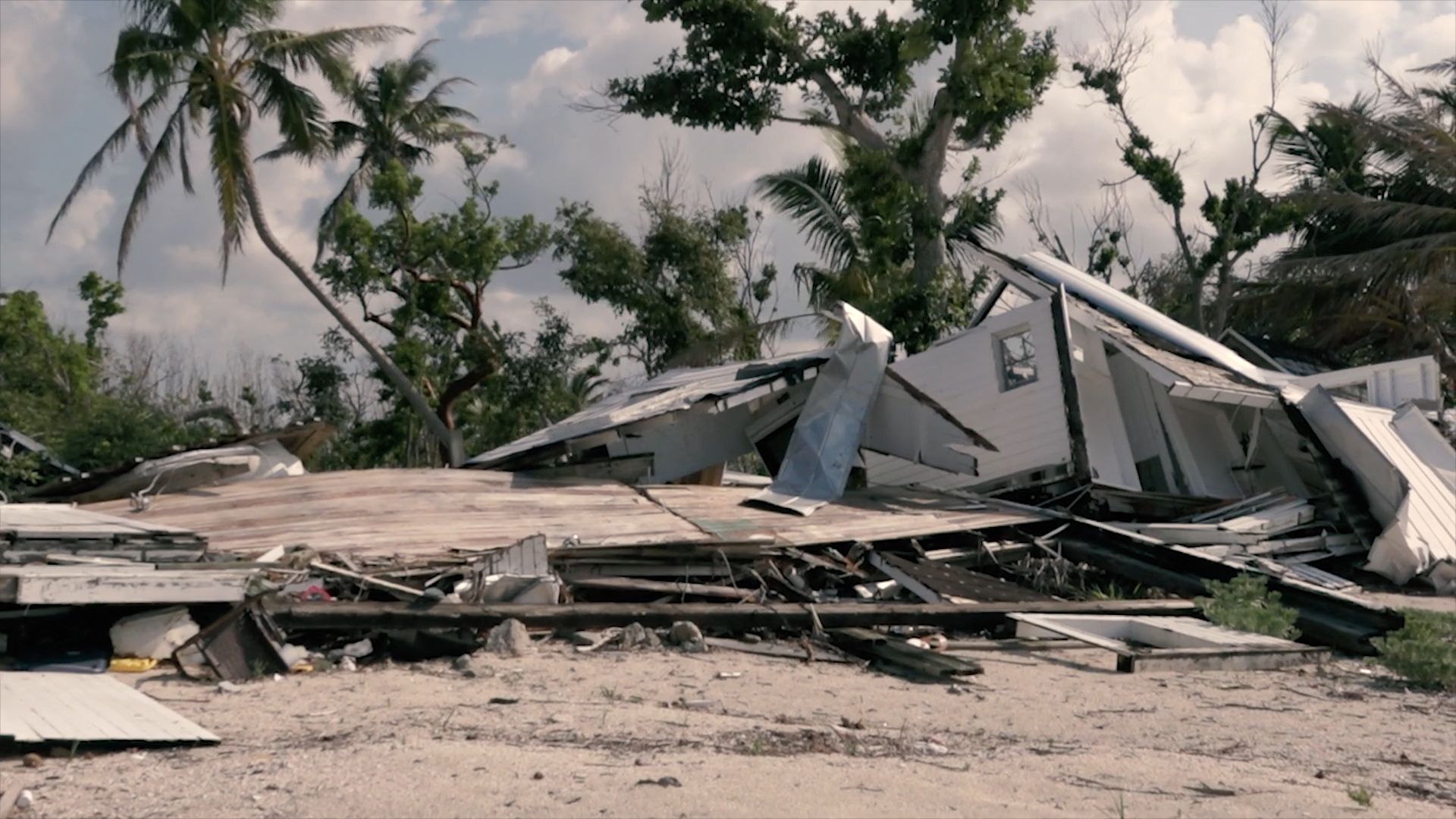
During the Spoleto Festival, ‘Mahler – Songs of the Earth’ and Mahler & LeWitt Studios presented a series of films dedicated to the Brazilian photographer and environmentalist Sebastião Salgado (1944–2025) which respond to the climate crisis and draw on Gustav Mahler’s legacy as the ‘singer of nature’. In the first of two screenings we presented: three shorts by Diane Tuft (Coastal Requiem, The Arctic Melt, and Symphonic Poem), MediaLane’s Mahler’s Universe ‘Das Lied von der Erde’, and Margreth Olin’s Songs of Earth. In a second screening we presented: Jason Starr’s Everywhere & Forever: Mahler’s Song of the Earth and Wim Wenders and Juliano Ribeiro Salgado’s film The Salt of the Earth which portrays Sebastião Salgado.
Summer Session
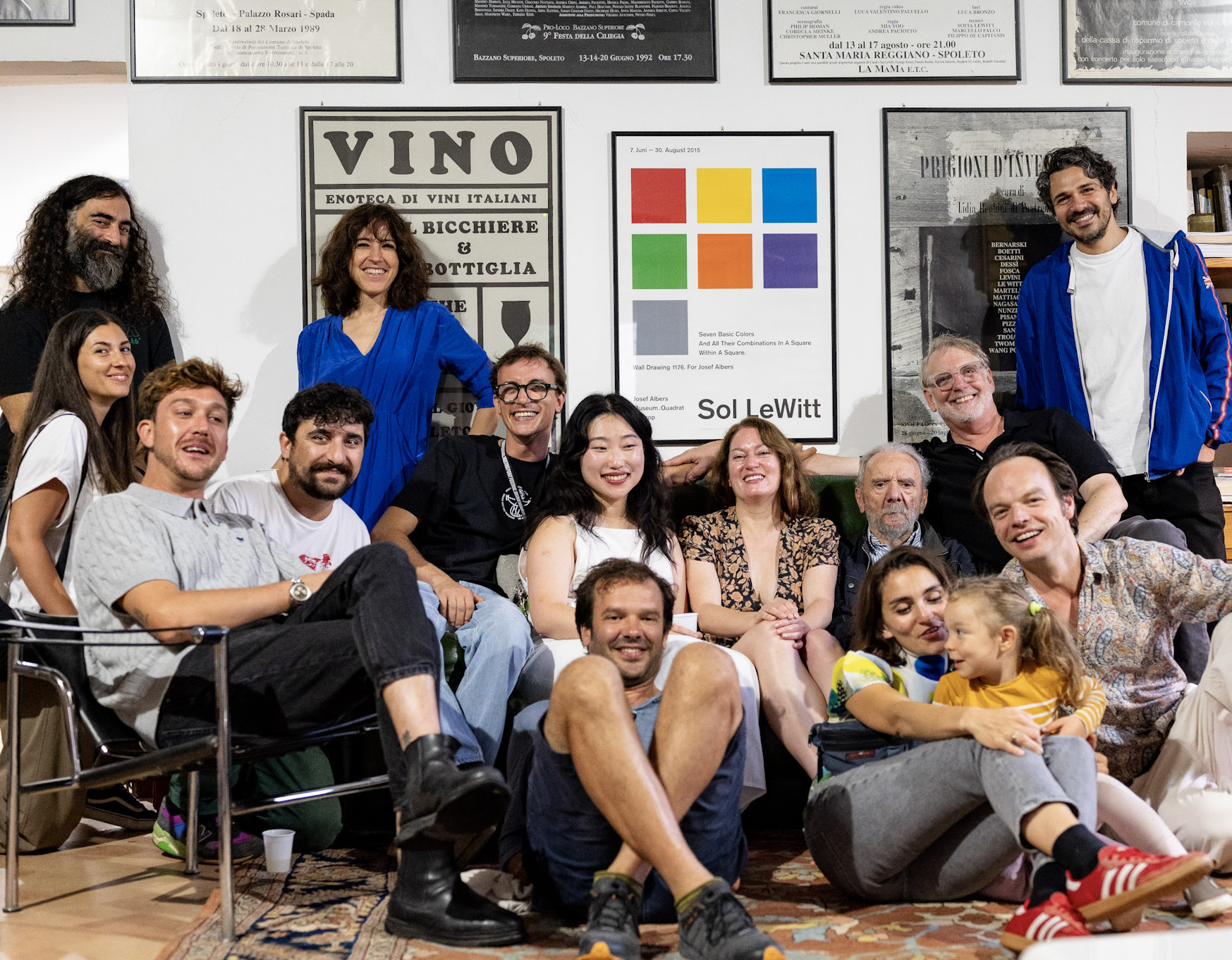
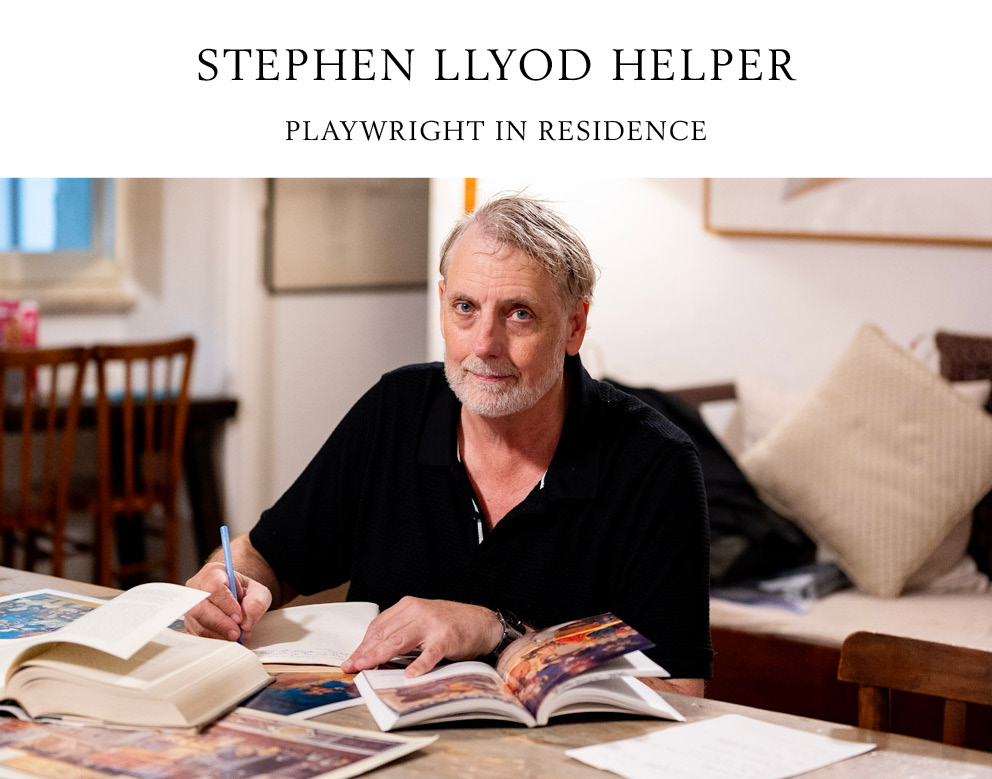
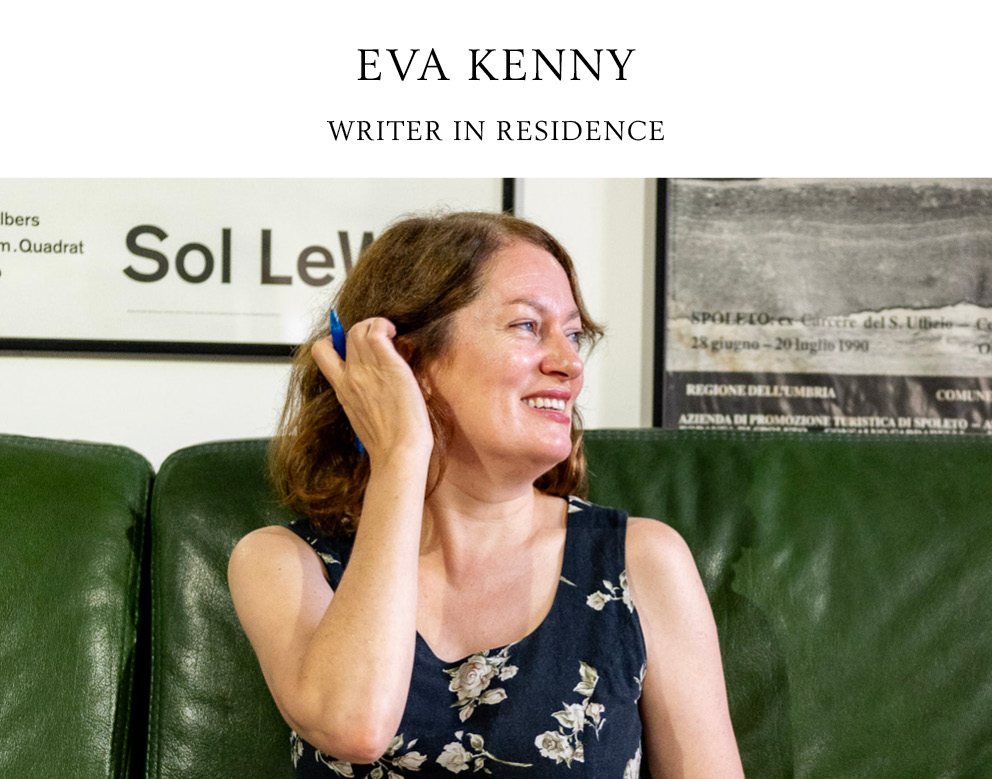
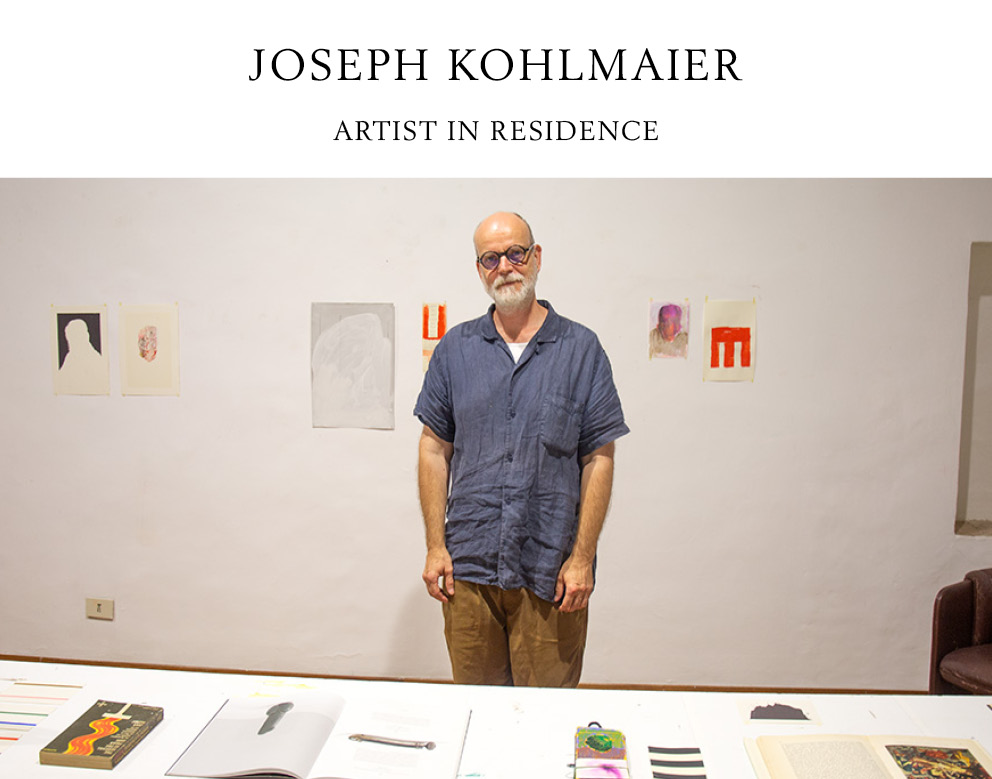
For our Summer Session we were joined by two of our Open Call awardees: artist Haejin Park attended as part of our partnership with Yale University Art Gallery and Yale School of Art, while writer Lucy Mercer was the winner of the Fitzcarraldo Editions / Mahler & LeWitt Studios Essay Prize. The session also hosted theatre writer Stephen Lloyd Helper, art historian Eva Kenny, and artist Joseph Kohlmaier.
Haejin Park
Yale School of Art x Yale University Art Gallery
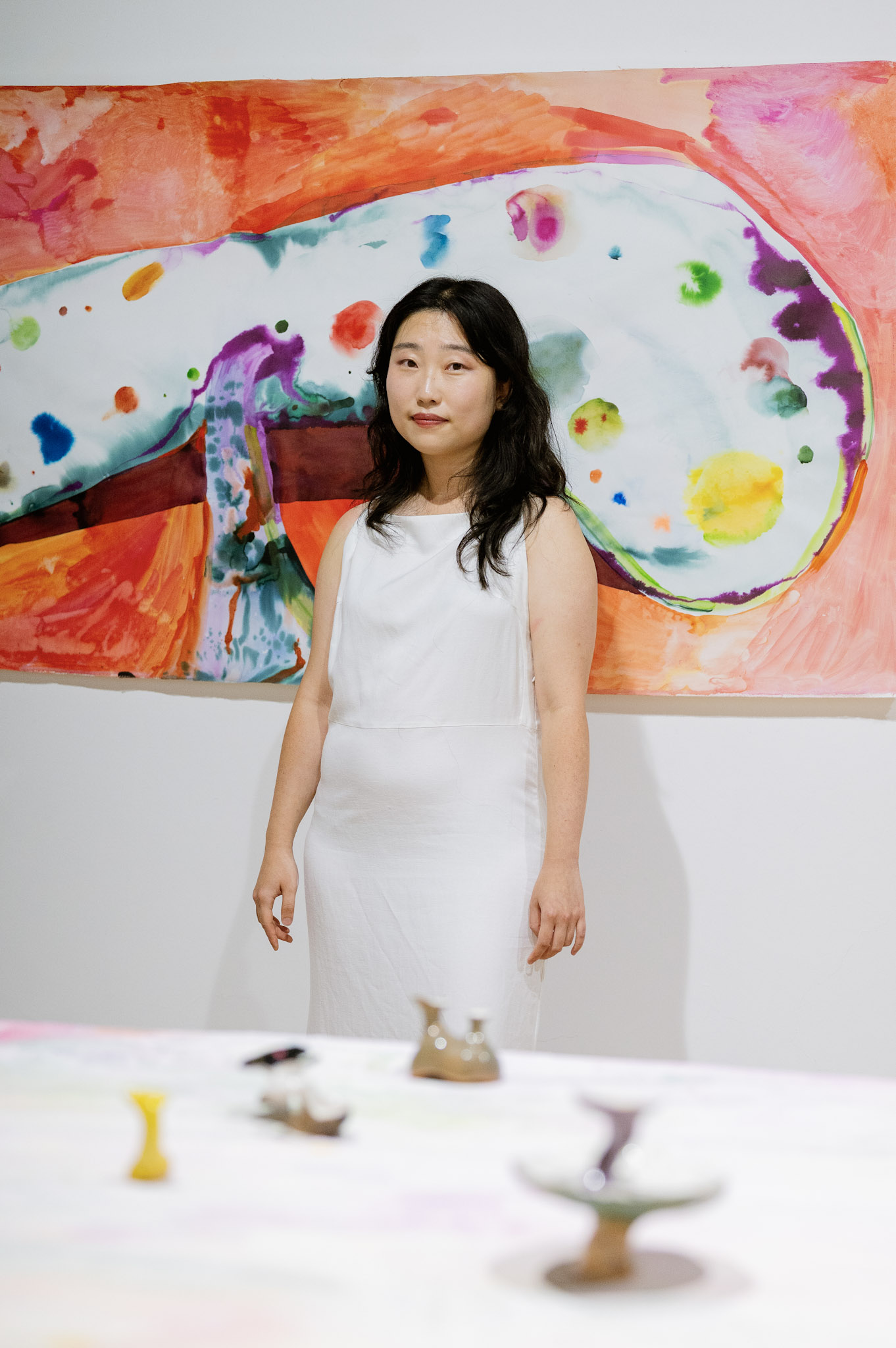
Haejin Park was awarded our open call opportunity in partnership with Yale School of Art and Yale University Art Gallery. As well as a funded research and development residency at the Mahler & LeWitt Studios, Park benefitted from a series of mentoring sessions with Keely Orgeman, Seymour H. Knox, Jr., Curator of Modern and Contemporary Art at Yale University Art Gallery.
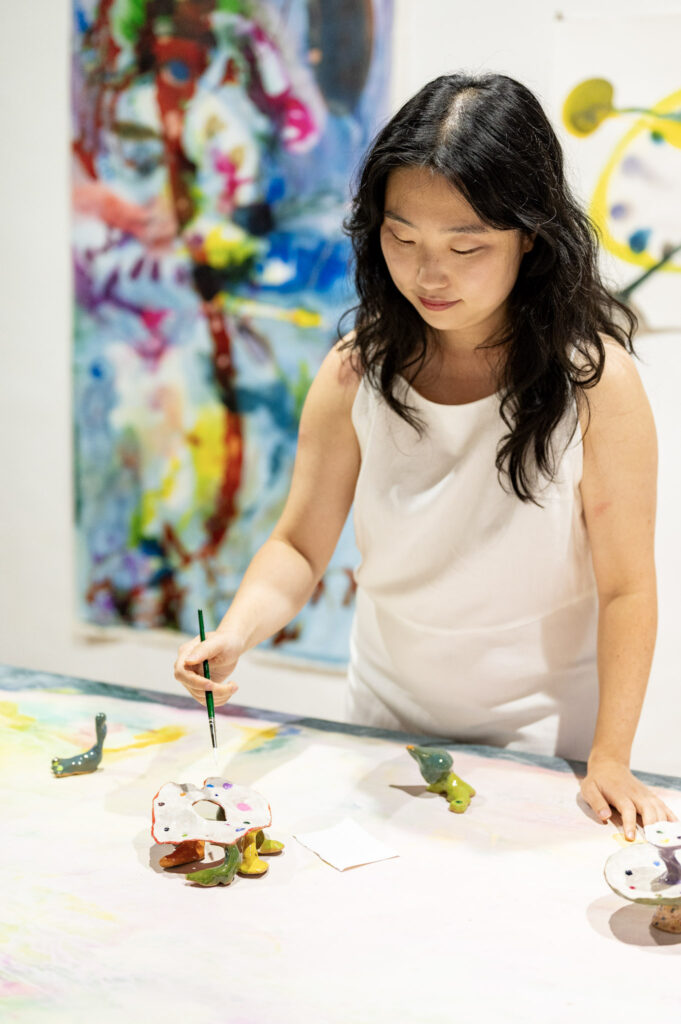
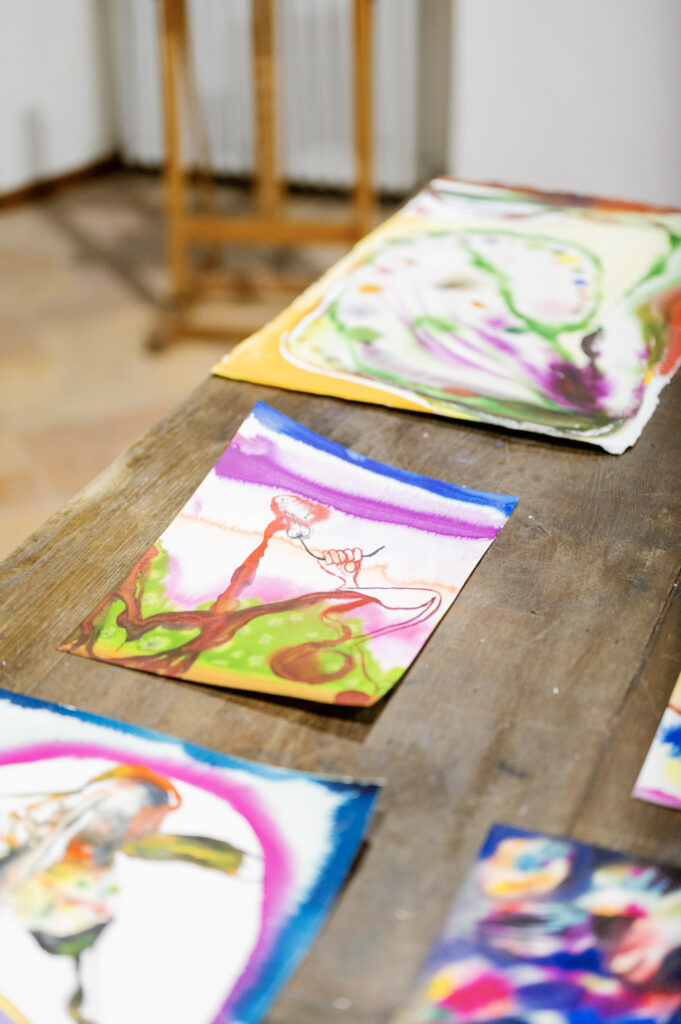
Park’s paintings use watercolor as a fluid emotional archive. She constructs raw, expressive faces that hover between presence and absence, creating bruising and complex narratives with fleeting bursts of color. She earned her MFA from Yale University in 2025 and her BFA from the Rhode Island School of Design in 2015.
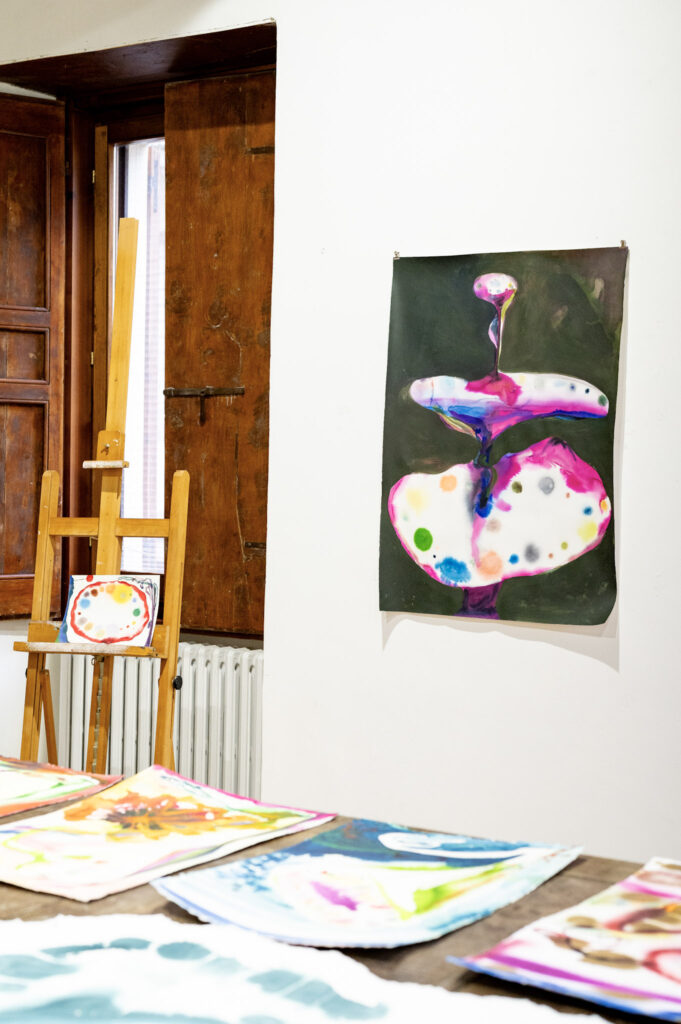
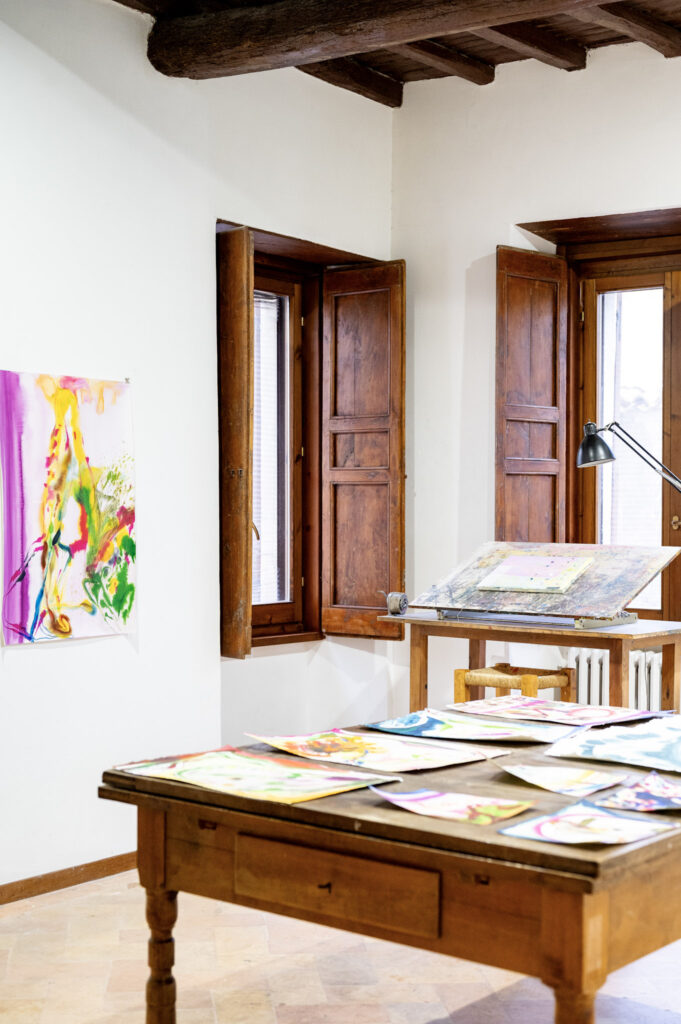
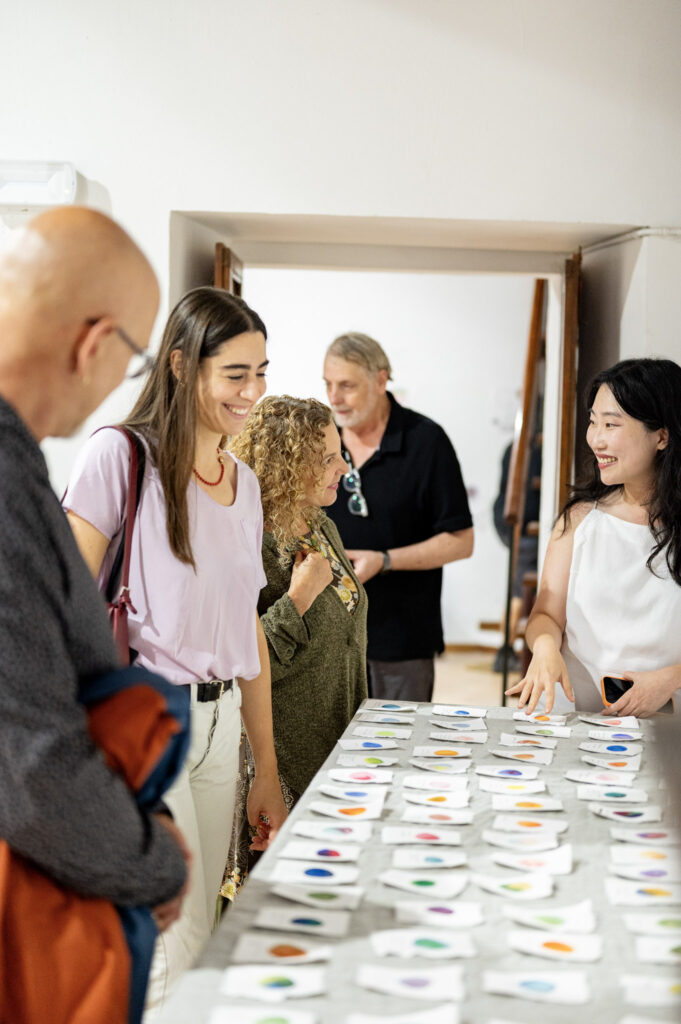
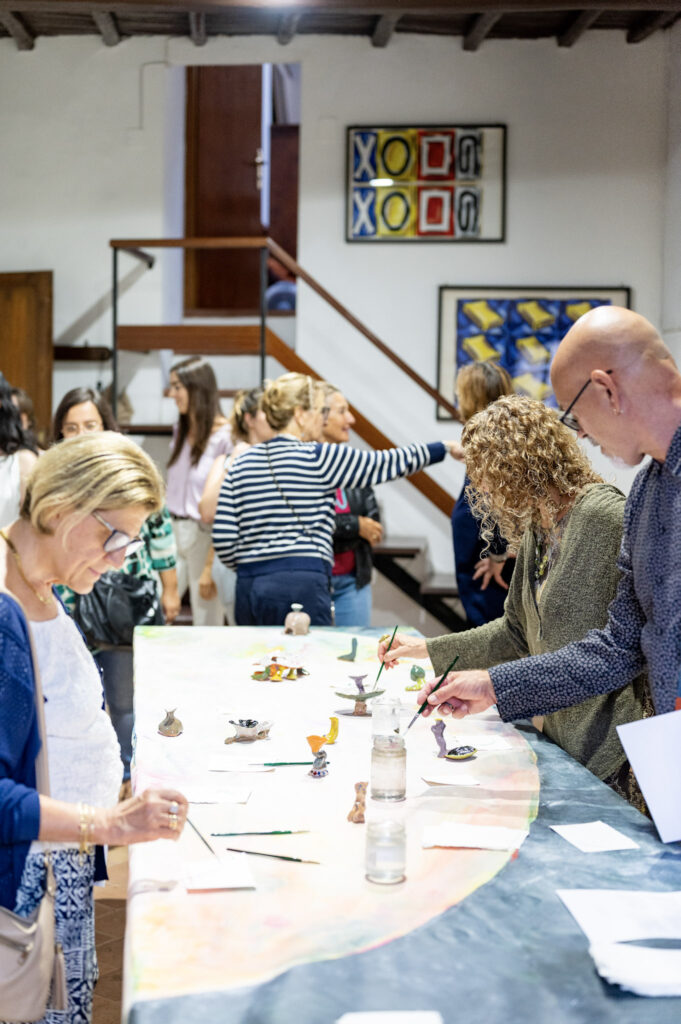
In Spoleto she developed a new body of work on paper referencing artist’s palettes, among other motifs. She worked in ceramics for the first time, developing a series of interactive sculptures which visitors to the Open Studios were invited to use to paint their own designs. During her residency she also kept a chromatic record – spots of colour on paper, annotated withe names – documenting her meetings with people in the city.
Follow the links below to learn more about the other artists and writers in residence on the Summer Session:
We hope to welcome you to Spoleto soon. Please do get in touch with any questions.
Thank you for reading.